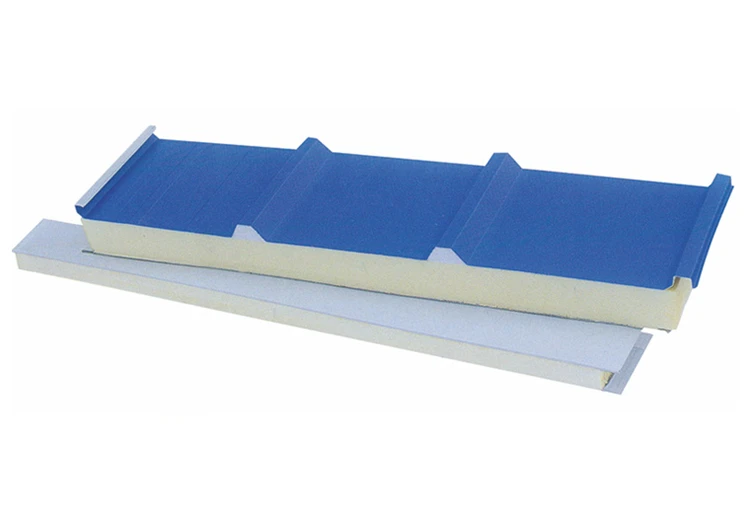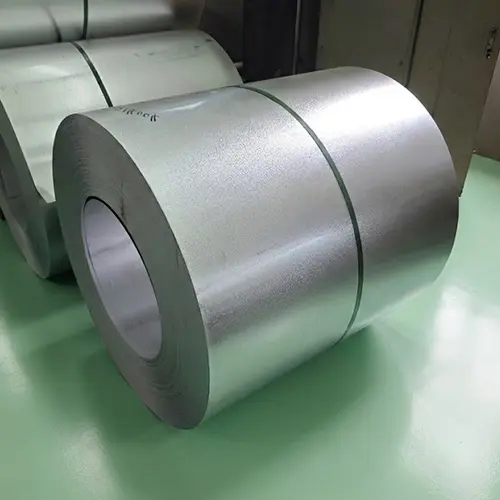
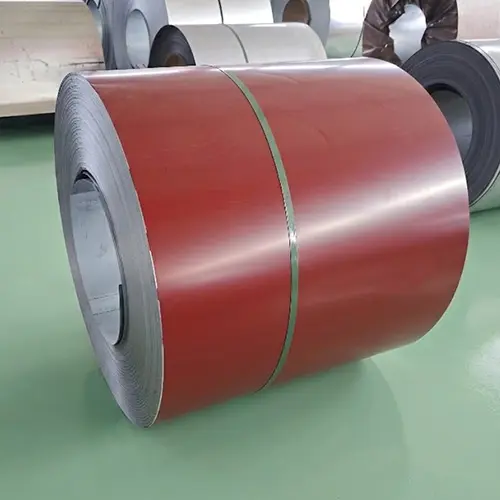

You face a frustrating reality on your line. Two coils share the same thickness and RAL color. Yet they behave differently during sandwich panel manufacturing. Substrate, yield strength, thickness tolerance, metallic coating, paint system, and adhesion all drive this gap.
So you ask: PPGI or PPGL? What thickness? What hardness? What coating weight? PE, SMP, HDP, or PVDF? How much does back-coat adhesion matter? What belongs in your PO?
This guide helps manufacturers evaluate these specifications against production process, panel type, service environment, and fire resistance needs. Finding the Best Steel Coil for Sandwich Panel Manufacturing starts here.
Key Takeaways
- The best steel coil depends on your production line, panel design, and service environment.
- Fire safety starts with the steel core and coating type, not just thickness and price.
- Seven specifications matter most: substrate, thickness, mechanical properties, metallic coating, paint system, paint thickness and adhesion, and width tolerance.
- Paint adhesion and T-bend performance are critical for bonding and forming success.
- Match the steel coil to your panel type and climate for optimal performance.
- Test a new coil thoroughly before mass production to avoid costly problems.
- Use a detailed specification checklist and compare cost per usable finished panel, not just price per ton.
- Ask suppliers key questions to ensure quality and consistency.
What Is the Best Steel Coil for Sandwich Panel Manufacturing?
You want a direct answer. The truth is simpler and harder at the same time. The best steel coil for sandwich panel manufacturing depends on your line, your panel design, and the final service environment. No single product wins every project.
PPGI Steel Coil vs. PPGL: Which Is Better?
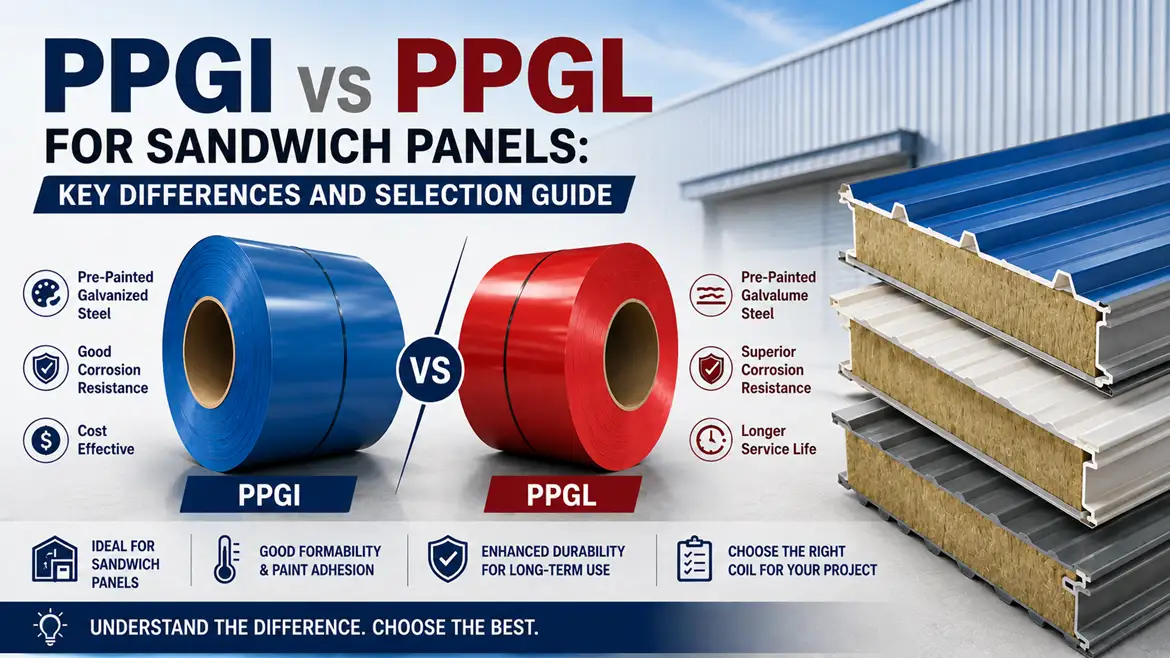
Substrate, Metallic Coating, and Paint Layers
A ppgi steel coil uses a galvanized substrate with a zinc coating. A PPGL coil uses a Galvalume substrate with an aluminum-zinc coating. Both then receive pretreatment, primer, and topcoat or backcoat paint layers. These layers determine corrosion protection, appearance, and forming behavior.
When to Evaluate PPGI vs. PPGL
You evaluate both options when your project involves exterior exposure, humid air, or coastal salt. Indoor wall panels often work well with a ppgi steel coil. Coastal applications may favor PPGL. Cost also shifts the decision. A ppgi steel coil usually costs less per ton.
| Factor | PPGI | PPGL |
|---|---|---|
| Substrate | Galvanized | Galvalume |
| Metallic coating | Zinc | Al-Zn |
| Forming | Good with suitable grade | Good with suitable grade |
| Corrosion protection | Good | Often stronger in suitable environments |
| Indoor panels | Common | Available |
| Exterior panels | Common | Common |
| Humid environments | Specification dependent | Worth evaluating |
| Coastal applications | Requires appropriate system | Often worth considering |
| Cost | Often lower | Often higher |
There is no universal winner. For a deeper comparison, read our guide on PPGI vs PPGL for Sandwich Panel Production.
Why Fire Safety Starts with the Steel Core
Thermal Stability and Structural Integrity
Fire resistance begins with the steel core. Steel does not burn. It holds its shape under heat far longer than foam or other core materials. A stable core keeps the panel together during a fire. This protects building occupants and slows structural failure.
How Coating Type Affects Heat Reflection
Coating type also matters for fire resistance. Light-colored paint reflects more radiant heat. A ppgi steel coil with a reflective topcoat can reduce surface temperature gain. Dark colors absorb more heat. This affects fire resistance at the panel surface. Your core material selection and coating system together shape real fire performance.
Fire resistance depends on substrate, coating, and paint system. Thickness and price alone tell you little. Many manufacturers learn this lesson late. A cheap ppgi steel coil with poor coating quality may fail under heat. Quality control during production protects your reputation. Choose a ppgi steel coil that matches your fire resistance goals. Then verify it on your line before mass production.
7 Specifications That Matter Most for Sandwich Panel Manufacturing
Don’t compare sandwich panel steel only by thickness and price. That approach hides the real cost drivers. Seven specifications shape your production outcome: substrate, thickness, mechanical properties, metallic coating, paint system, paint thickness and adhesion, and width with dimensional tolerance. Each one affects forming, bonding, appearance, and fire resistance.
Substrate, Thickness, and Mechanical Properties
Yield Strength, Tensile Strength, and Elongation
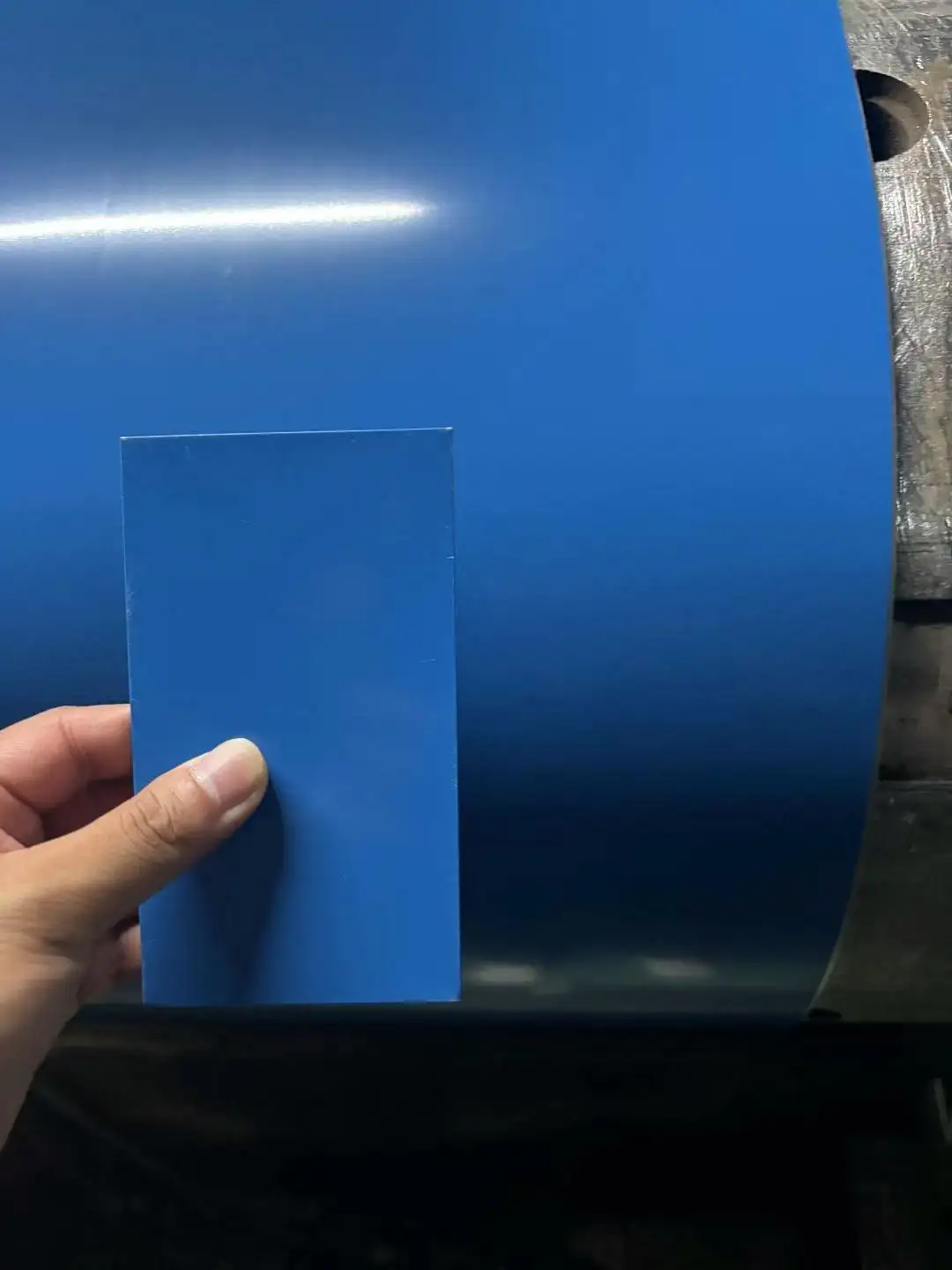
You need more than a “soft” or “hard” label. Yield strength tells you when steel begins permanent deformation. Tensile strength shows the maximum stress the material can bear. Elongation measures how far it stretches before breaking. These three values together define coil strength for your line.
Steel that is too soft deforms under pressure. Your panel loses rigidity. Profile stability drops. Steel that is too hard brings springback, forming difficulty, cracking, and edge problems. A suitable balance between strength and formability serves sandwich panel manufacturing far better than a simple hardness request.
Why the Hardest Steel Is Not Always Best
Hardness alone does not predict forming success. A hard ppgi steel coil may crack at tight bend radii. A softer coil may fail under load. You want consistent mechanical properties across the full coil length. This consistency supports stable production speed and reduces scrap.
Thickness also matters here. A 0.40 mm nominal thickness does not tell the whole story. Tolerance affects meters per ton, panel weight, and forming stability. Thinner steel lowers weight and material cost. It also risks deformation and handling damage. Thicker steel improves rigidity but raises material consumption and panel weight. Check actual tolerance, not just the nominal figure.
Metallic Coating, Paint System, and Adhesion
Zinc vs. Al-Zn Coating Weight
More coating is not always better. Match coating weight to the environment. Indoor wall panels need less protection. Standard exterior panels need more. Humid environments demand higher coating quality requirements. Coastal and industrial environments need careful evaluation of metallic coating, paint system, cut edges, and actual exposure.
A ppgi steel coil with a zinc coating performs well in many standard applications. PPGL with an Al-Zn coating often suits more aggressive conditions. Your coating specifications should reflect the real service environment, not a generic “more is better” rule.
PE, SMP, HDP, and PVDF Paint Systems
Paint system choice affects weather resistance, color retention, and cost. Consider your panel type and final use.
| Paint System | Relative Cost | Weather Resistance | Typical Consideration |
|---|---|---|---|
| PE | Lower | Standard | General panels |
| SMP | Medium | Higher | Exterior panels |
| HDP | Medium–High | High | Higher durability |
| PVDF | Higher | Very High | Demanding exterior |
A standard EPS sandwich panel factory may not need PVDF. That system suits demanding exterior projects with strong UV exposure. Match the paint system to your actual market and service life target.
Width, Tolerance, and Surface Quality
How Coil Width Affects Production Yield
Cheaper USD per ton does not guarantee lower cost per finished panel. Width tolerance drives waste. Suppose Coil A costs $X per ton with 3% waste. Coil B costs $X plus $10 per ton with 0.5% waste. Coil B may deliver a lower cost per usable panel. Correct width reduces trimming, scrap, and material utilization losses. It also supports continuous production speed and better line efficiency.
Surface Defects and Color Consistency
A defect that looks minor on a coil can become highly visible across a large finished wall panel. Scratches, roller marks, dents, and paint defects all show up on exterior surfaces. Manufacturers must inspect surface quality before approval.
Color consistency between batches deserves equal attention. RAL 9002 in batch one and batch two may differ visually. Large warehouses, cold rooms, and industrial buildings often mix batches on the same facade. Control color difference, gloss, paint supplier, and batch records. Approve a physical sample first. Then hold every shipment to that standard. This protects your reputation and reduces complaints.
Why Paint Adhesion and T-Bend Matter for Sandwich Panel Manufacturers
Sandwich panel manufacturing involves more than roll forming. You also need a strong bond between the steel surface, the adhesive, and the foam or core material. Paint adhesion directly affects how well these layers hold together. Poor adhesion leads to delamination and panel failure.
Outer Surface vs. Inner/Back Surface Requirements
Weathering, Scratch Resistance, and Forming
The outer surface faces the environment. It must maintain good appearance over years of exposure. Weathering resistance protects against UV rays, rain, and temperature swings. Scratch resistance prevents damage during handling and installation. Forming performance ensures the paint layer stays intact when the coil bends into a panel profile.
You want a topcoat that suits your climate. High-UV areas demand stronger paint systems. Humid regions need corrosion protection at the surface. The outer surface must survive the roll forming process without cracking or peeling. Check these properties before you approve a new coil for production.
Back Paint and Bonding Performance
The inner or back surface serves a different role. It does not need the same weather resistance as the outer side. It requires strong adhesion compatibility with your core material. Whether you produce PU, PIR, EPS, or rock wool panels, the back paint must bond reliably with the adhesive.
Poor back paint adhesion causes separation between the steel and the core. This reduces panel strength and fire resistance. A surface that looks good on the top may fail on the inside. Verify that the back coat matches your adhesive chemistry and process parameters. This is one area where cutting corners on quality creates expensive warranty claims later.
What T-Bend Tells Sandwich Panel Manufacturers
Coating Flexibility During Bending and Forming
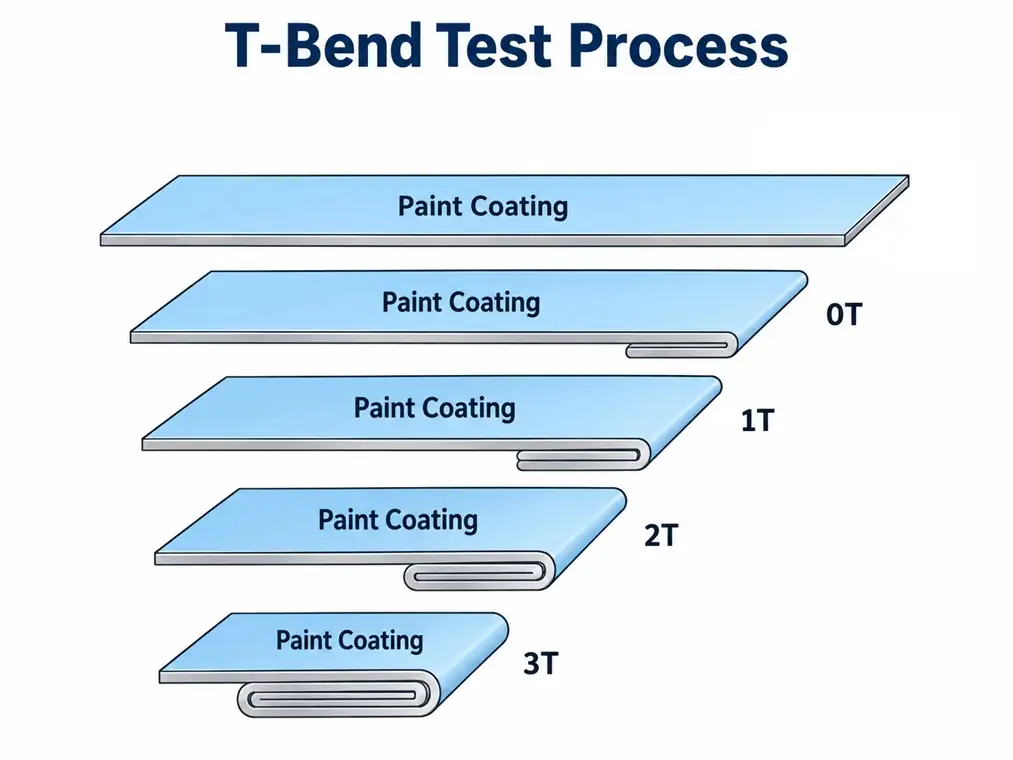
T-bend testing measures coating flexibility. The test bends a coated sample around itself. A lower T-bend number means better flexibility. The coating stretches without cracking or losing adhesion to the substrate.
This result matters directly for your line. Your roll former creates bends, ribs, and folded edges. If the coating cannot flex enough, it cracks at these points. Cracks expose the substrate to moisture and corrosion. They also create weak points in the finished panel. Sandwich panel manufacturers use T-bend values to predict forming success and reduce scrap.
When T-Bend Deserves Attention
Not every panel profile needs a tight T-bend specification. But you should pay attention when your design includes ribs, edge bends, joints, or tight profiles. The tighter the bend radius, the more coating flexibility you require.
Check T-bend performance for panels that undergo deep forming. A flat panel surface can tolerate a higher T-bend value. A complex profile demands lower T-bend performance. Match the T-bend requirement to your panel design and production line setup.
For a detailed explanation of how T-bend testing works and how to interpret results, read our guide: What Is a T-Bend Test for Color Coated Steel Coil?
Good paint adhesion and proper T-bend performance together improve bonding quality. They reduce production defects. They protect your panels from early failure. Verify these properties during your trial coil process before mass production begins.
Best Steel Coil for Different Sandwich Panel Types and Environments
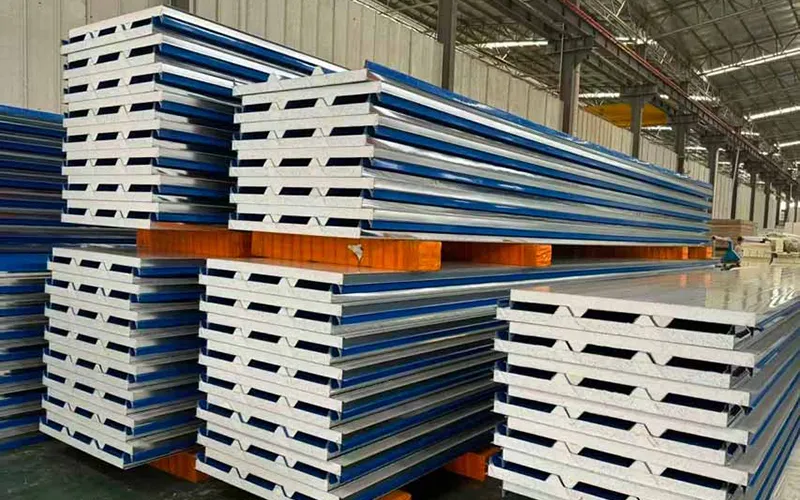
Your panel type shapes your steel coil choice. Each application brings different demands for forming, bonding, corrosion protection, and appearance. The table below shows which coil to evaluate for common panel types.
| Sandwich Panel | Steel Coil to Evaluate | Main Focus |
|---|---|---|
| EPS Wall Panel | PPGI / PPGL | Cost + surface + adhesion |
| EPS Roof Panel | PPGI / PPGL | Formability + corrosion |
| PU Panel | PPGI / PPGL | Adhesion + consistency |
| PIR Panel | PPGI / PPGL | Surface + adhesion + durability |
| Rock Wool Panel | PPGI / PPGL | Rigidity + coating |
| Cold Room Panel | PPGI / suitable coated steel | Surface + environment |
| Exterior Wall Panel | PPGI / PPGL | Color + weathering |
| Roofing Sandwich Panel | PPGI / PPGL | Corrosion + forming |
Matching Steel Coil to Panel Type
EPS, PU, PIR, Rock Wool, and Cold Room Panels
EPS panels need good surface quality and reliable adhesion at a competitive cost. A ppgi steel coil often fits these projects well. PU and PIR panels demand strong bonding between the steel back surface and the foam core. Your core material selection and back-coat compatibility directly affect bond strength and fire resistance.
Rock wool panels require greater rigidity because the core is denser and heavier. You need steel with suitable yield strength to hold the profile. Cold room panels face constant moisture and temperature swings. Surface quality and coating protection matter more than decorative appearance.
Roofing vs. Wall Panels
Roofing panels face rain, UV radiation, and thermal movement. They need stronger corrosion protection and better formability for deeper profiles. Wall panels focus more on appearance and color consistency. Both types benefit from a ppgi steel coil with proven paint adhesion.
How Climate and Environment Change Material Selection
Tropical, Humid, Coastal, and High-UV Areas
Tropical and humid regions bring moisture and condensation. These conditions attack cut edges and uncoated surfaces. Your coating protection system must handle constant dampness. Coastal areas add salt to the equation. Salt accelerates corrosion at cut edges and scratches. Evaluate the full coating system, not just the metallic coating weight.
High-UV areas demand paint systems with strong color retention. Standard PE paint may fade faster under intense sunlight. SMP or HDP systems offer better protection. Do not assume one coil type wins everywhere. A ppgi steel coil with the right paint system can outperform a poorly specified PPGL coil in many environments.
Cold Storage and Industrial Environments
Cold storage facilities create condensation on panel surfaces. Internal environments may expose panels to moisture, cleaning chemicals, and temperature cycling. Surface quality and adhesion performance matter for long-term durability. Industrial environments may add chemical exposure or abrasive conditions. Your quality checks should reflect these specific risks.
Match your coil specification to the real service environment. This approach supports stable production and reduces field failures. For manufacturers serving multiple markets, keep separate specifications for each climate zone. This protects your reputation and your customers’ investments.
Common Steel Coil Problems in Sandwich Panel Production
Even with the right specification, quality problems can appear during sandwich panel manufacturing. Know where each issue starts to fix it faster. The problems you see have two possible origins: the material itself or your process setup. Identify the true cause first. Then apply the right solution.
Material vs. Production Causes
Paint Cracking, Peeling, and Poor Adhesion
Paint cracking happens when the coating cannot flex enough during forming. The material side involves paint flexibility and hardness. A stiff coating cracks at a tight bend radius. On the process side, the forming radius may be too tight for the chosen coil. Check both sides before changing your specification.
Paint peeling has a different root. Material causes include poor primer adhesion or contamination on the substrate. Process causes include excessive roller pressure or incorrect forming speed. You see peeling at panel edges or along bend lines. This reduces service life and needs fast correction.
Poor adhesion between the steel and the core affects panel strength. On the material side, the back coat may not match your adhesive chemistry. On the process side, the adhesive ratio or line speed may be wrong. Your ppgi steel coil needs the right back coat for your core material. Verify this during your trial coil.
Deformation, Roller Marks, and Scratches
Panel deformation appears as waviness or bowing. Material-side causes include low thickness or low yield strength. Process-side causes include incorrect machine setup or roller misalignment. A ppgi steel coil with consistent mechanical quality reduces this risk.
Roller marks show as repeating patterns on the panel surface. The material side involves surface sensitivity. The process side involves roller condition. Dirty rollers create visible defects. Clean your rollers regularly and match pressure to the coil.
Surface scratches result from handling on both sides. Soft steel scratches more easily. Your line needs clean guides and proper tension. A small scratch on the coil becomes visible on a large wall panel.
Color Difference, Thickness Variation, and Edge Wave
Excessive Production Scrap
High scrap rates reduce profit. Material causes include thickness variation, width problems, and color inconsistency. Process causes include improper speed, setup errors, and poor handling. Track your scrap by cause. Repeat issues with the same material mean the coil specification needs adjustment. Issues across different coils mean your line setup needs attention. Manufacturers who address root causes improve stability.
Problem-to-Cause Mapping
The table below lists the 10 most common problems in sandwich panel manufacturing. Use it on your line.
| Problem | Material Side | Process Side |
|---|---|---|
| Paint cracking | Paint flexibility / hardness | Forming radius |
| Paint peeling | Primer adhesion / contamination | Roller pressure / speed |
| Poor adhesion | Back coat / surface | Adhesive mix / curing |
| Panel deformation | Thickness / yield strength | Machine setup / rollers |
| Roller marks | Surface sensitivity | Roller condition |
| Surface scratches | Steel hardness | Handling / guides |
| Color difference | Batch control / paint system | — |
| Thickness variation | Tolerance / substrate | Roller gap / tension |
| Edge wave | Residual stress / shape | Side guides / tension |
| Excessive scrap | Multiple material factors | Process speed / setup |
Sandwich panel manufacturers who track problems by cause reduce scrap over time. You improve speed and output quality when you address the real root. A consistent steel coil with verified specs prevents many material issues. Share this mapping with your line operators.
How to Test a New Steel Coil Before Mass Production
You cannot trust a new supplier’s specification sheet alone. A coil that looks good on paper may fail on your line. Testing a new ppgi steel coil before mass production protects your sandwich panel manufacturing operation and prevents costly downtime. Many manufacturers skip lab testing and pay for it later. Follow a structured trial process to verify performance and consistency.
From Specification Review to Trial Coil
Laboratory Testing and Sample Evaluation
Start with a specification review. Confirm that the coil matches your requirements for substrate, thickness, yield strength, metallic coating, and paint system. Get a physical sample from the supplier. Test it in your lab for paint adhesion, T-bend, and coating quality. Compare these results to your accepted limits. If the sample passes, move to the next stage.
Running on the Actual Sandwich Panel Line
Load a full ppgi steel coil onto your line. Run it at your normal speed and settings. Observe how the material forms. A coil that performs well in lab tests may still cause issues at line speed. Run enough panels to see consistent behavior. Track any deviations in forming, color, or surface finish.
Here is a seven-step process that keeps the trial organized:
- Specification Review – Check that every parameter in the PO matches the supplier’s proposal.
- Sample – Request a small coil end or cut sample for preliminary testing.
- Laboratory Testing – Measure adhesion, flexibility, hardness, and coating quality.
- Trial Coil – Order one full coil for line testing, not hundreds of tons.
- Run on Actual Sandwich Panel Line – Process the coil under normal conditions.
- Check Finished Panel – Inspect every critical property.
- Confirm Mass Production Specification – Document the approved parameters for future orders.
What to Check on the Finished Panel
Forming, Adhesion, Surface, and Dimensions
Inspect the formed panel for shape accuracy. Measure panel width, profile depth, and flatness. Check the bond between the steel and core. Poor adhesion shows up as separation at cut edges. Examine the surface for scratches, roller marks, or dents. A small surface defect on the coil becomes obvious on a large wall panel. Use a gloss meter and color reader to confirm the finish matches the approved standard. Pay attention to overall surface quality.
Cracking, Scratches, Bonding, and Scrap Rate
Look at every bend and fold. Cracking at these points means the coating lacks flexibility. Scratches indicate handling issues or hard particles in the line. Bonding quality appears when you cut the panel open. The core should stick firmly to the back paint. Finally, calculate the scrap rate from the trial run. Compare it to your normal production scrap level. A high scrap rate signals a mismatch between the coil and your process.
Use this checklist during every trial:
- Forming: Profile dimension, flatness, edge condition
- Adhesion: Steel-to-core bond, peel test
- Surface: Scratches, marks, color, gloss, quality
- Panel dimension: Width, length, squareness
- Cracking: At bends, ribs, and cut edges
- Scratches: On top and back surfaces
- Bonding: Adhesive coverage and strength
- Scrap rate: Percentage of rejected panels
Testing a new coil thoroughly keeps your line stable and your output quality consistent. Sandwich panel manufacturers who follow this trial process reduce risk. A structured trial ensures the coil meets your production capacity needs without surprises. Do not skip any step. The time you invest here saves you from line stoppages and customer complaints later.
Specification Checklist and Supplier Comparison
Your purchase order is your most powerful quality control tool. A vague PO invites problems. Every sandwich panel manufacturer should specify critical parameters clearly when ordering a ppgi steel coil. This checklist covers every specification needed for consistent production.
What to Include in a Steel Coil Specification
Material, Substrate Grade, Thickness, and Tolerance
Start with the material type. State PPGI or PPGL. Then define the substrate grade. Common options include DX51D, DX52D, or S250GD. Each grade delivers different mechanical properties. Thickness needs more than a nominal value. Add the acceptable tolerance range. A coil listed at 0.40 mm may arrive at 0.38 mm or 0.42 mm. That difference changes panel weight and forming stability. Width also needs a tolerance specification.
| Parameter | What to Specify |
|---|---|
| Material | PPGI or PPGL |
| Substrate grade | DX51D, DX52D, S250GD |
| Nominal thickness | 0.40 mm, 0.50 mm |
| Thickness tolerance | ±0.02 mm |
| Nominal width | 1000 mm, 1200 mm |
| Width tolerance | +2 mm / -0 mm |
| Metallic coating | Z100, Z140, AZ100, AZ150 |
| Coating weight min. | Single-spot or triple-spot |
| Paint type | PE, SMP, HDP, PVDF |
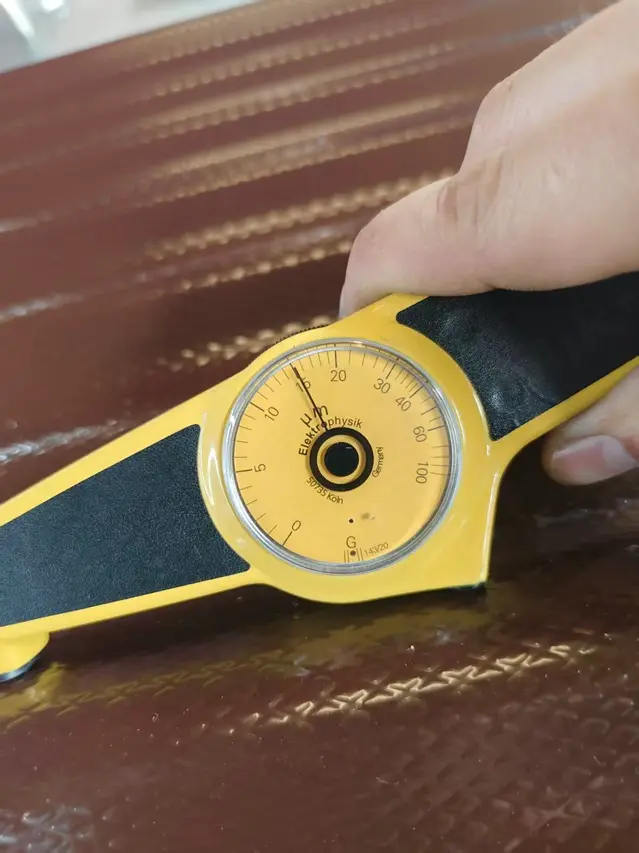
| Top paint thickness | 20 µm, 25 µm |
| Back paint thickness | 7 µm, 10 µm |
| RAL color | RAL 9002, RAL 9010 |
| Gloss level | 30–40 % at 60° |
| Yield strength | 250–350 MPa |
| Tensile strength | 350–450 MPa |
| Elongation | ≥ 20 % |
| T-Bend | 0T, 1T |
| Paint adhesion | Cross-cut or tape test |
| Coil ID | 508 mm, 610 mm |
| Coil weight | 3–5 MT per coil |
| Packing | Seaworthy or export |
| MTC | Required |
| Third-party inspection | If required |
Coating, Paint, Color, Gloss, and Mechanical Properties
This part covers coating specifications and mechanical performance. Metallic coating weight drives corrosion protection. A coastal project demands higher weight than an indoor wall panel. Paint type determines weather resistance. Top paint thickness affects long-term durability. Back paint thickness influences bonding with the core material. Gloss level ensures visual consistency across batches. Yield strength, tensile strength, and elongation define forming behavior on your line. T-Bend and paint adhesion confirm coating flexibility during bending. Coil ID and weight must match your line capacity. Packing standards protect coils during shipping. Always request a mill test certificate. Consider third-party inspection for large orders.
This checklist helps suppliers understand your quality expectations. Adjust each value based on your panel type and service environment. Use it when writing every PO.
How to Compare Two Steel Coil Quotations
Cost per Usable Finished Panel vs. Price per Ton
A lower price per ton does not always save you money. Consider this example. Supplier A offers a ppgi steel coil at $720 per metric ton. Supplier B offers the same nominal specification at $735 per ton. Many buyers choose Supplier A immediately. But the real cost depends on hidden details.
Compare thickness tolerance. Supplier A may supply 0.38 mm actual thickness while Supplier B delivers 0.42 mm. Thinner steel means fewer square meters per ton and lower panel rigidity. Compare coating weight. A lower coating weight saves the supplier cost but reduces corrosion protection. Compare paint thickness. Thinner top paint saves material but fails earlier in outdoor service. Compare grade and yield strength. A lower grade may cause deformation on your line.
Compare width tolerance. Wider tolerance creates more scrap. Compare coil weight. Larger coils reduce downtime but need higher line capacity. Compare packing quality. Poor packing leads to transit damage. Compare payment terms and complaint handling. Supplier A may reject claims more often. Production yield differs too. Supplier A at $720 may create 3% scrap. Supplier B at $735 may create 0.5% scrap. The cost per usable finished panel tells the true story.
Compare the cost per usable finished panel—not only the steel price per ton.
This shift in thinking protects your operation. A higher cost per ton often delivers lower total cost when you factor in quality, scrap rate, and service life. Evaluate cost vs long-term value before you decide.
Questions to Ask Your Steel Coil Supplier
Ask these 10 questions before you place your first order. They help you evaluate supplier capability and product consistency.
- What actual thickness tolerance do you guarantee?
- What substrate grade is supplied in each coil?
- What is the yield strength range across the full coil?
- What metallic coating weight is guaranteed per order?
- What paint system is used for the topcoat?
- What are the top and back paint thicknesses?
- What T-bend performance can you supply consistently?
- How do you control color consistency between batches?
- What tests are included in your mill test certificate?
- Can we trial the material on our panel line before mass purchasing?
A supplier who answers each question clearly with supporting data is more reliable than one giving vague responses. Sandwich panel manufacturers who ask these questions reduce their purchasing risk. They also build stronger partnerships with their steel supplier. This approach moves your buying beyond price per ton. It focuses on stable production speed, consistent quality, and long-term value. Your panels perform better on site. Your customers stay satisfied. Your reputation grows with every order.
The best steel coil for sandwich panel manufacturing matches your panel design, production line, forming requirements, fire resistance needs, and final service environment. You must balance PPGI or PPGL choice with thickness, mechanical properties, metallic coating, paint system, adhesion, width, and real-world conditions.
Stop comparing price per ton alone. Compare cost per usable finished panel instead. This specification-driven approach protects fire resistance performance, ensures compliance, and builds your long-term reputation. Manufacturers who adopt this method reduce scrap and improve production stability.
Fire resistance begins with informed material choices. Verify each specification on your line before mass production. A thoughtful selection process prevents costly mistakes.
FAQ
What steel coil do you use for sandwich panels?
You use PPGI or PPGL coils. Both work for sandwich panel manufacturing. Your choice depends on the service environment, panel type, and forming needs. Indoor panels often use PPGI. Coastal projects may favor PPGL.
Is PPGI suitable for sandwich panel manufacturing?
Yes. PPGI works well for many sandwich panel applications. It offers good corrosion protection with a zinc coating. You can use it for indoor and exterior panels. Match the paint system and coating weight to your project needs.
Is PPGL better than PPGI for sandwich panels?
No universal answer exists. PPGL uses an Al-Zn coating. It often performs better in coastal and humid environments. PPGI usually costs less. Evaluate your service environment and budget before you decide.
What thickness of steel do you need for sandwich panels?
Thickness depends on your panel design and rigidity needs. Thinner steel lowers weight and cost. Thicker steel improves rigidity. Check actual tolerance, not just nominal thickness. A 0.40 mm nominal coil may vary in real thickness.
What hardness is best for sandwich panel steel?
You need balanced mechanical properties. Yield strength, tensile strength, and elongation matter more than a simple hardness label. Steel too soft deforms. Steel too hard cracks during forming. A suitable balance supports stable production.
Which paint coating works best for sandwich panels?
PE suits general panels at lower cost. SMP offers better weather resistance for exterior use. HDP provides higher durability. PVDF handles demanding exterior projects with strong UV exposure. Match the paint system to your market and service life target.
What is the difference between PPGI and PPGL sandwich panels?
PPGI panels use a galvanized substrate with zinc coating. PPGL
panels use a Galvalume substrate with an aluminum-zinc coating. Both receive primer and paint layers. The metallic coating type drives corrosion protection differences.
What specifications should manufacturers provide when buying steel coil?
Manufacturers should specify material type, substrate grade, thickness, tolerance, width, coating weight, paint system, paint thickness, RAL color, gloss, yield strength, tensile strength, elongation, T-Bend, and adhesion. Include coil ID, weight, packing, and MTC requirements in every PO.