

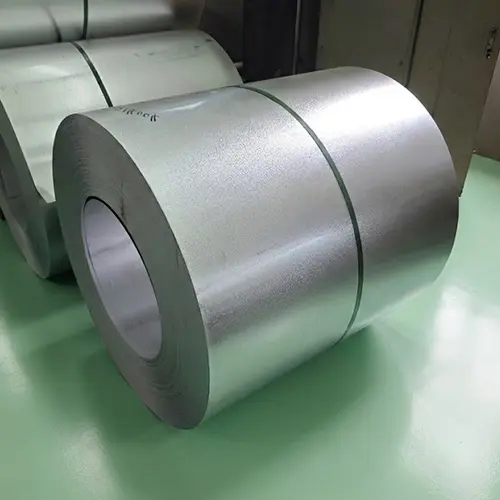
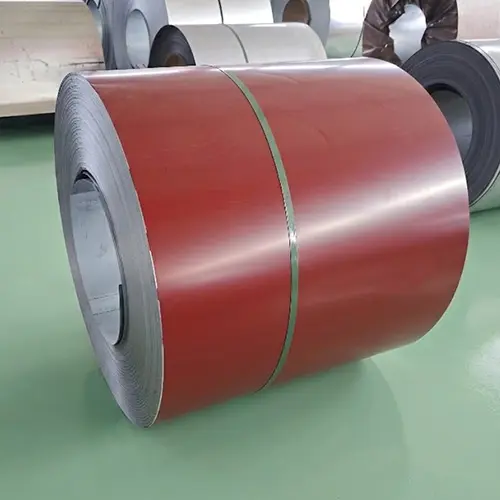

Choosing the wrong PPGI for cold room panels creates serious problems. Delamination, corrosion, and production downtime cost you money and delay projects. You need three critical factors: base metal thickness, coating type, and paint system. These must match your operating temperature and panel design.
This guide helps you understand how to choose PPGI for cold room panels. You will learn the key specifications that affect performance. You will also get a checklist for verifying supplier quality before you commit to an order. Each factor plays a specific role in panel durability. Thickness provides structural strength. Coating resists corrosion from condensation. Paint systems protect against wear and chemical exposure. When you match these factors correctly, your panels last longer and perform reliably in cold environments.

Key Takeaways
- Match base metal thickness to your cold room’s temperature. Use 0.40-0.45 mm for coolers and 0.50-0.60 mm for freezers.
- Always specify Base Metal Thickness (BMT) in your orders. Total Coated Thickness (TCT) includes paint and zinc, which add no strength.
- Choose a higher zinc coating like Z200 or Z275 for humid or washdown environments. This protects cut edges and prevents white rust.
- Select a paint system that matches your environment. Use PVDF or HDP for coastal or chemical-heavy areas, and standard polyester for dry storage.
- Verify backcoat adhesion with a bonding trial. This prevents panel delamination during temperature cycling.
- Ask suppliers for Mill Test Certificates and exact specifications. Vague terms like ‘equivalent’ hide quality issues.
- Inspect incoming coils. Measure BMT with a micrometer and test paint adhesion with a cross-hatch test.
- Match your PPGI to your application. Food processing needs chemical-resistant topcoats, while logistics warehouses can use standard options.
How to Choose PPGI for Cold Room Panels: The Basics

PPGI serves as the structural skin of a sandwich panel. It protects the insulation core, typically PIR or PUR foam, from damage and environmental exposure. The steel facing also provides the durable, cleanable surface that cold rooms require for food safety and hygiene compliance. Without a properly specified PPGI layer, the entire panel system fails prematurely.
A cross-section shows the PPGI outer facing, insulation core, and PPGI inner facing. Each layer performs a distinct job. The outer facing must withstand weather, impacts, and UV exposure. The inner facing must resist condensation and cleaning chemicals. The insulation core between them provides thermal performance. Understanding these separate roles helps you specify the right product for each surface.
The Role of PPGI in Sandwich Panel Construction
Outer Facing: Protection and Aesthetics
The outer facing takes the brunt of physical abuse. It resists scratches from forklifts, impacts from pallets, and weathering from sunlight. The topcoat also determines the panel’s appearance. Color retention and gloss stability matter for facilities that represent a brand or need to present a professional image.
You should select the outer facing based on the installation environment. Coastal locations demand higher corrosion resistance. Facilities near processing equipment may need chemical resistance. The outer facing’s paint system must match these exposure conditions to maintain both protection and appearance over time.
Inner Facing: Hygiene and Condensation Resistance
The inner facing faces a different set of challenges. Cold room interiors experience frequent condensation as warm air meets cold surfaces. This moisture creates ideal conditions for corrosion and bacterial growth. The inner facing must resist these effects while remaining easy to clean.
Food processing facilities require inner facings that withstand regular washdowns with sanitizing agents. The paint system must resist chemical attack without degrading. A smooth, pinhole-free surface prevents bacteria from finding harborage points. You need a topcoat that maintains its integrity despite constant moisture exposure.
The Critical Back Coating for Foam Bonding
The back coating receives less attention but plays an equally vital role. This coating must bond reliably with the foam core during panel production. If the backcoat fails to adhere, the panel delaminates. Delamination destroys the panel’s structural integrity and thermal performance.
The backcoat chemistry differs from the topcoat. It must promote adhesion with the specific foam formulation used in your production line. Surface tension and cleanliness affect this bond. You should verify backcoat compatibility with your foam system before committing to a full production run.
How PPGI Performance Impacts Panel Lifespan
Preventing Core Delamination in Temperature Cycling
Cold room panels experience constant temperature cycling. The panel expands and contracts as temperatures shift between operating and ambient conditions. This movement stresses the bond between the steel facing and the foam core. A weak bond fails under this repeated stress.
Delamination typically starts at panel edges or cutouts where stress concentrates. Once separation begins, moisture enters the gap. The moisture accelerates corrosion and further weakens the bond. Proper backcoat selection prevents this failure mode from developing.
Maintaining Structural Integrity Under Load
The PPGI facing provides the panel’s structural strength. The foam core offers insulation but little load-bearing capacity. The steel skin carries the loads from racking systems, overhead equipment, and wind pressure. Thicker base metal provides greater rigidity and load capacity.
Panel sagging becomes a concern with insufficient thickness. Long spans between supports amplify this risk. You must match the steel thickness to the panel span and expected loads. A panel that flexes excessively will eventually fatigue and fail at the connection points.
Key Specifications to Evaluate for Cold Room Panels

Three specifications determine how well your PPGI performs in cold room conditions. Base metal thickness provides structural strength. Zinc coating weight resists corrosion. The paint system protects against wear and chemical exposure. Each specification interacts with the others. You must evaluate all three together, not in isolation.
Base Metal Thickness (BMT) vs. Total Coated Thickness (TCT)
Suppliers quote PPGI in two ways. Base metal thickness (BMT) measures only the steel substrate. Total coated thickness (TCT) includes the zinc layer and paint films. The difference between these measurements matters more than you might expect.
| Specification | 0.40 mm Coil | 0.50 mm Coil | 0.60 mm Coil |
|---|---|---|---|
| Base Metal Thickness (BMT) | 0.40 mm | 0.50 mm | 0.60 mm |
| Zinc Coating (Z100) | ~0.014 mm | ~0.014 mm | ~0.014 mm |
| Paint System (typical) | ~0.020 mm | ~0.020 mm | ~0.020 mm |
| Total Coated Thickness (TCT) | ~0.434 mm | ~0.534 mm | ~0.634 mm |
Why the Distinction Matters for Quoting
A supplier quoting TCT instead of BMT creates confusion. You might think you are buying 0.50 mm steel. In reality, you receive 0.50 mm of total material, with only about 0.47 mm of actual steel. This difference affects panel strength and sag resistance. The structural performance depends on the steel thickness alone. Paint and zinc contribute nothing to load-bearing capacity.
How to Specify Thickness Correctly
Always specify BMT in your purchase orders. Write “0.50 mm BMT” rather than “0.50 mm coil.” This simple clarification prevents misunderstandings. Ask your supplier to confirm the BMT on the mill test certificate. Measure incoming coils with a micrometer after stripping a small section of coating. This verification step takes minutes and prevents costly production issues.
Zinc Coating Weight and Corrosion Resistance
Zinc coating weight measures the amount of zinc applied per square meter of steel surface. The designation uses a “Z” prefix followed by a number. Z100 means 100 grams of zinc per square meter, measured across both sides of the sheet. Higher numbers indicate thicker zinc layers and better corrosion protection.
Understanding the Z100 to Z275 Range
Cold room panels typically use zinc coatings from Z100 to Z275. Z100 provides adequate protection for dry, climate-controlled environments. Z275 offers roughly three times the zinc mass and substantially longer corrosion resistance. The choice depends on your specific operating conditions. Higher zinc weights cost more, so you should match the coating to the actual exposure risk rather than defaulting to the maximum.
Matching Zinc Coating to Humidity and Washdown Conditions
Condensation forms constantly on cold room surfaces. This moisture attacks exposed steel edges and scratches. Food processing facilities face additional risks from frequent washdowns and sanitizing chemicals. These environments demand higher zinc weights. Z200 or Z275 coatings provide a safety margin when panels face regular moisture exposure. For dry storage warehouses with minimal condensation, Z100 often performs adequately.
The Paint System: Topcoat and Backcoat
The paint system consists of two separate layers with different jobs. The topcoat faces the environment and handles aesthetics, UV resistance, and chemical protection. The backcoat faces the foam core and must bond securely during panel production. You cannot treat these as a single specification.
Topcoat Types: Polyester, PVDF, and HDP
Polyester is the standard choice for cold room panels. It offers good formability, color retention, and corrosion resistance at a reasonable cost. PVDF (polyvinylidene fluoride) provides superior UV resistance and color stability. This option suits exterior facings exposed to direct sunlight. HDP (high-durability polyester) sits between these two options. It delivers better performance than standard polyester without the premium price of PVDF. Your choice depends on the panel’s location and exposure conditions.
Backcoat Adhesion: The Key to Foam Bonding
The backcoat must create a strong bond with the foam core. This bond prevents delamination during temperature cycling. A backcoat with poor adhesion fails silently over time. The panel separates from the foam, and the entire structure loses strength. You should verify backcoat compatibility with your specific foam formulation. Request a bonding trial before committing to a full production run. This test reveals adhesion issues before they become expensive problems.
Understanding these specifications helps you apply the principles of How to Choose PPGI for Cold Room Panels effectively. The right combination of BMT, zinc coating, and paint system ensures your panels perform reliably for decades. The next section explains how to match these specifications to your operating temperature.
How to Match PPGI Thickness to Cold Room Temperature
The operating temperature of your cold room determines the structural demands placed on the PPGI facing. Colder environments require thicker steel to maintain panel rigidity and prevent sagging. Warmer cool rooms can use lighter gauge material without compromising performance. Understanding this relationship helps you avoid both over-specifying and under-specifying your panels.

Common Thickness Options and Their Applications
0.40 mm to 0.45 mm for Cooler Rooms (0°C to 10°C)
Cooler rooms operate at temperatures between 0°C and 10°C. These environments include vegetable storage, dairy processing, and beverage warehouses. The temperature differential between the interior and exterior remains moderate. Panel spans typically range from 75 mm to 100 mm in thickness. This configuration allows you to use PPGI with a base metal thickness of 0.40 mm to 0.45 mm.
The lighter gauge provides sufficient structural strength for these conditions. Temperature cycling creates less stress on the panel system. The foam core experiences minimal expansion and contraction. Your panels maintain their shape without excessive flexing. This thickness range also reduces material costs, making it an economical choice for cooler room applications.
You should still verify that the 0.40 mm option meets your specific span requirements. Longer unsupported spans may demand the 0.45 mm specification. Racking systems that attach directly to panels also increase load requirements. Evaluate your installation layout before finalizing the thickness specification.
0.50 mm to 0.60 mm for Freezer Rooms (-18°C to -25°C)
Freezer rooms operate at significantly colder temperatures. These facilities store frozen foods, ice cream, and other temperature-sensitive products. The temperature differential between interior and exterior can exceed 40°C. This extreme difference creates substantial thermal stress on panel systems. Panel thickness typically ranges from 100 mm to 120 mm to provide adequate insulation.
You need a base metal thickness of 0.50 mm to 0.60 mm for these demanding conditions. The thicker steel provides the structural rigidity required to resist thermal movement. Panels experience repeated expansion and contraction cycles as the refrigeration system cycles. A 0.40 mm facing would flex excessively under these conditions. This flexing leads to fatigue at connection points and potential delamination over time.
The 0.60 mm option provides additional safety margin for large freezer rooms. Wide panel spans and heavy overhead loads benefit from the extra stiffness. You should choose 0.60 mm when your freezer room has unusually long unsupported spans or frequent temperature fluctuations.
Balancing Stiffness, Flatness, and Cost
The Impact of Thickness on Panel Sagging
Panel sagging occurs when the steel facing cannot resist gravitational forces over long spans. Thicker steel provides greater flexural rigidity. The relationship between thickness and stiffness follows a cubic progression. A 0.60 mm sheet is roughly 70% stiffer than a 0.50 mm sheet of the same width. This dramatic difference explains why thickness selection matters so much for freezer applications.
Sagging creates several problems beyond visual appearance. A sagging panel develops gaps at the joints. These gaps allow cold air to escape and warm air to enter. The refrigeration system works harder to maintain temperature. Moisture infiltration at these gaps leads to corrosion and foam degradation. You should always calculate the maximum span based on your chosen thickness before ordering.
How Thickness Affects Handling and Installation
Thicker PPGI weighs more and requires different handling procedures. A 0.60 mm sheet weighs approximately 20% more than a 0.50 mm sheet of the same dimensions. Your installation crew needs equipment rated for this additional weight. Lifting points and support structures must accommodate the heavier panels.
Thicker material also resists bending during installation. Panel profiles require precise forming to achieve proper interlocking. The profiling equipment must have sufficient power to form 0.60 mm steel without cracking the paint system. You should verify that your panel production line can handle the specified thickness before committing to a purchase order.
Verifying Supplier Thickness Tolerance
Why a ‘0.50 mm’ Quote Can Vary Between Suppliers
Not all 0.50 mm PPGI is truly 0.50 mm. Steel mills produce coils within a specified tolerance range. Standard tolerance for cold-rolled steel is typically ±0.02 mm. This means a “0.50 mm” coil could measure anywhere from 0.48 mm to 0.52 mm. Some suppliers quote the nominal thickness while others quote the minimum thickness.
A supplier quoting minimum thickness delivers coils that measure at least 0.50 mm. This approach provides a safety margin but costs more. A supplier quoting nominal thickness may deliver coils at the lower end of the tolerance range. Your panels could end up with 0.48 mm steel instead of the expected 0.50 mm. This difference affects structural performance and panel rigidity.
Questions to Ask Your Steel Coil Supplier
You should ask specific questions before placing an order. Request the exact thickness tolerance for the coils you are purchasing. Ask whether the quoted thickness represents nominal or minimum values. Request a mill test certificate that shows the actual measured thickness for each coil. This documentation provides traceable evidence of what you receive.
You should also ask about consistency across the coil. Thickness can vary between the edges and the center of a coil. Edge-to-center variation affects panel flatness and profiling quality. Ask your supplier how they control this variation. A reputable supplier will provide clear answers and documentation. A supplier who cannot answer these questions may not deliver the quality you need.
Applying these principles of How to Choose PPGI for Cold Room Panels ensures your thickness specification matches your operating conditions. The next section explains how to select the substrate grade and zinc coating for your specific cold storage environment.
Selecting Substrate Grade and Zinc Coating for Cold Storage
The steel substrate beneath your paint system determines how well your PPGI performs during panel profiling and how long it resists corrosion. You must choose the right grade and zinc coating for your specific cold storage environment. These two specifications work together to protect your panels from the unique challenges of cold room operation.

Choosing the Right Steel Grade (DX51D vs. DX52D)
Steel grade designations describe the material’s mechanical properties and formability. DX51D and DX52D are the two most common grades for cold room panel applications. Each offers different characteristics that affect how the steel behaves during profiling and how it performs in service.
Formability Requirements for Panel Profiling
Panel profiling involves roll forming or press braking the flat PPGI sheet into the ribbed panel profile. This process bends the steel to tight radii without cracking the paint system. DX51D provides good formability for standard panel profiles with moderate bend radii. Most cold room panels use this grade successfully.
DX52D offers enhanced formability for more complex profiles. If your panel design includes deep draws, tight corners, or multiple bends in close proximity, DX52D reduces the risk of paint cracking at these stress points. The improved ductility allows the steel to stretch further before reaching its breaking point. You should choose DX52D when your profiling equipment creates demanding geometric shapes.
Why Full Hard or G550 Grades Are Not Recommended
Full hard and G550 grades offer high strength but poor formability. These materials resist bending and crack easily during profiling. The paint system separates from the steel substrate when the metal fractures. You cannot produce reliable cold room panels from these grades.
The high yield strength of G550 also creates springback issues. Panels formed from this material tend to return toward their original flat shape after profiling. This springback makes panel assembly difficult and creates inconsistent joint gaps. You should always specify DX51D or DX52D for cold room panel applications.
Choosing the Optimal Zinc Coating for Condensation Environments
Zinc coating weight directly controls how long your panels resist corrosion. Cold room environments create constant condensation on panel surfaces. This moisture attacks exposed steel edges and scratches in the paint system. You must match the zinc coating to the humidity level your panels will face.
The Risk of ‘White Rust’ in Humid Conditions
White rust forms when zinc reacts with moisture in a confined space. This powdery white corrosion product appears on cut edges, scratches, and areas where panels overlap. White rust does not immediately compromise structural integrity, but it signals that corrosion is actively consuming your zinc layer.
Once white rust develops, the zinc coating thickness decreases rapidly. The remaining zinc provides less protection against red rust formation on the underlying steel. In high-humidity cold rooms, white rust can appear within weeks if you choose an inadequate zinc coating weight. You should inspect panel edges regularly during the first months of operation.
When to Consider a Higher Zinc Coating Weight (e.g., Z275)
Standard Z100 or Z150 coatings may suffice for dry storage warehouses with minimal condensation. However, food processing facilities and freezer rooms with frequent washdowns demand more protection. Z275 provides roughly three times the zinc mass of Z100, offering substantially longer corrosion resistance in humid conditions.
You should also consider Z275 when panels will be cut or drilled on-site. Every cut edge exposes bare steel that relies on the zinc layer for protection. A heavier zinc coating provides a larger sacrificial reserve at these vulnerable points. The additional cost of Z275 is minimal compared to the expense of premature panel replacement.
How to Choose PPGI for Cold Room Panels: Application-Specific Needs
Your application determines the final specification more than any other factor. A logistics warehouse and a food processing plant operate under completely different conditions. You must match your PPGI selection to the specific demands of your facility. This section explains how to apply the principles of How to Choose PPGI for Cold Room Panels to real-world scenarios.
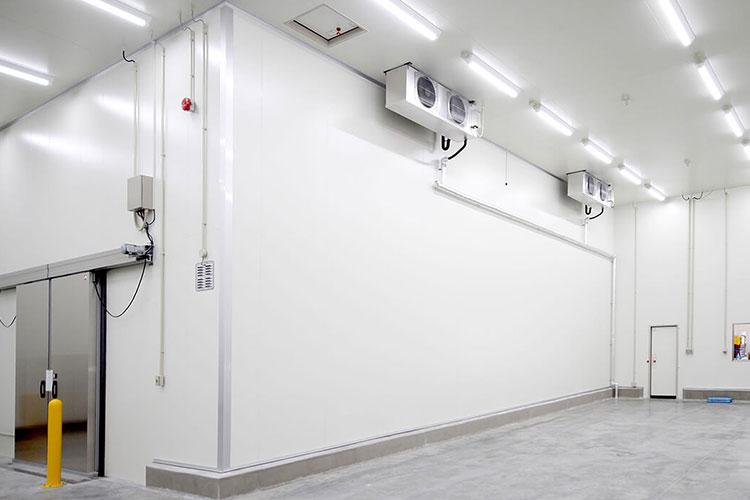
Cold Storage for Food Processing vs. General Logistics
Hygiene, Chemical Resistance, and Frequent Washdowns
Food processing facilities face constant cleaning cycles. Sanitizing agents, caustic washes, and hot water hit panel surfaces daily. These chemicals attack the paint system aggressively. Standard polyester topcoats degrade under repeated exposure to strong cleaning agents. You need a topcoat formulated for chemical resistance in these environments.
Fire resistance also matters in food processing. Many facilities require panels that meet fire safety standards. The core material must resist flame spread, and the PPGI coating must withstand elevated temperatures without releasing toxic fumes. You should verify that your chosen paint system meets the fire classification required by local building codes.
General logistics warehouses operate under milder conditions. Cleaning happens less frequently and uses gentler products. Standard polyester topcoats perform adequately in these settings. You can allocate your budget toward other specifications, such as thicker steel or higher zinc coating, rather than premium paint systems.
Aesthetic Requirements for Customer-Facing Facilities
Some cold storage facilities serve as customer-facing operations. Distribution centers that host client tours or retail cold rooms that shoppers see directly require consistent appearance. Color matching between panel batches matters. Gloss retention keeps panels looking new for years. PVDF or HDP topcoats deliver superior color stability compared to standard polyester.
Logistics warehouses rarely need this level of aesthetic performance. The panels sit behind loading docks and industrial equipment. Minor color variation between batches goes unnoticed. You can choose standard polyester and save money without sacrificing performance.
| Specification | Logistics Warehouse | Food Processing Plant |
|---|---|---|
| Base Metal Thickness | 0.40–0.50 mm | 0.50–0.60 mm |
| Zinc Coating | Z100–Z150 | Z200–Z275 |
| Topcoat Type | Polyester | HDP or specialty chemical-resistant |
| Backcoat | Standard adhesion | Enhanced adhesion for fire-resistant foam |
| Fire Rating | Standard | Meets local code requirements |
Compatibility with PIR and PUR Foam Core Systems
Ensuring Backcoat Adhesion for Continuous Production Lines
Your panel production line runs continuously. Each meter of PPGI must bond reliably with the foam core as it passes through the laminator. A backcoat that fails intermittently creates scrap panels and production stoppages. You need a backcoat with consistent adhesion properties across the entire coil.
Fire-resistant foam formulations often require different backcoat chemistry. The additives that improve fire performance can interfere with bonding. You should request a bonding trial with your specific foam formulation before ordering large quantities. This trial reveals compatibility issues before they disrupt your production schedule.
The Role of Surface Tension and Cleaning in Bonding
Surface tension determines how well the foam wets the backcoat surface. Higher surface tension promotes better adhesion. The backcoat must have a surface energy that matches your foam system’s characteristics. You can measure surface tension with a simple dyne test using pens or solutions.
Contamination reduces surface tension and weakens bonds. Dust, oil, and moisture on the PPGI surface create barriers between the backcoat and foam. Your production line should include a cleaning station that removes contaminants before the foam application step. Regular cleaning prevents adhesion failures that appear weeks or months after panel installation.
Environmental Considerations for Coastal or High-Humidity Regions
Upgrading the Paint System for Salt Air Exposure
Coastal installations expose panels to salt-laden air. Salt accelerates corrosion dramatically compared to fresh water. Standard polyester topcoats provide insufficient protection in these conditions. You should upgrade to PVDF or a specialized marine-grade paint system. These coatings resist salt attack and maintain their protective properties for decades.
The zinc coating also needs upgrading in coastal environments. Z275 provides the sacrificial protection necessary to guard cut edges and scratches. You might consider even heavier zinc coatings for extreme coastal exposure. The additional cost remains small compared to premature panel replacement.
The Importance of Edge Corrosion Protection
Panel edges remain the most vulnerable points. Cutting and drilling operations expose bare steel at every cut. The zinc coating provides the only protection at these locations. A heavier zinc coating extends edge life substantially. You should also consider applying a cold zinc-rich primer to cut edges during installation.
Proper edge sealing prevents moisture ingress into the foam core. Once moisture enters the core, corrosion spreads from the inside out. You cannot see this damage until the panel fails structurally. Edge protection should be part of your installation checklist, not an afterthought.
How to Verify PPGI Quality Before You Buy
You have selected your specifications and placed your order. The coils arrive at your facility. Now you must verify that the material matches what you requested. A few simple checks protect you from costly surprises during panel production. These checks take minutes but save hours of troubleshooting later.
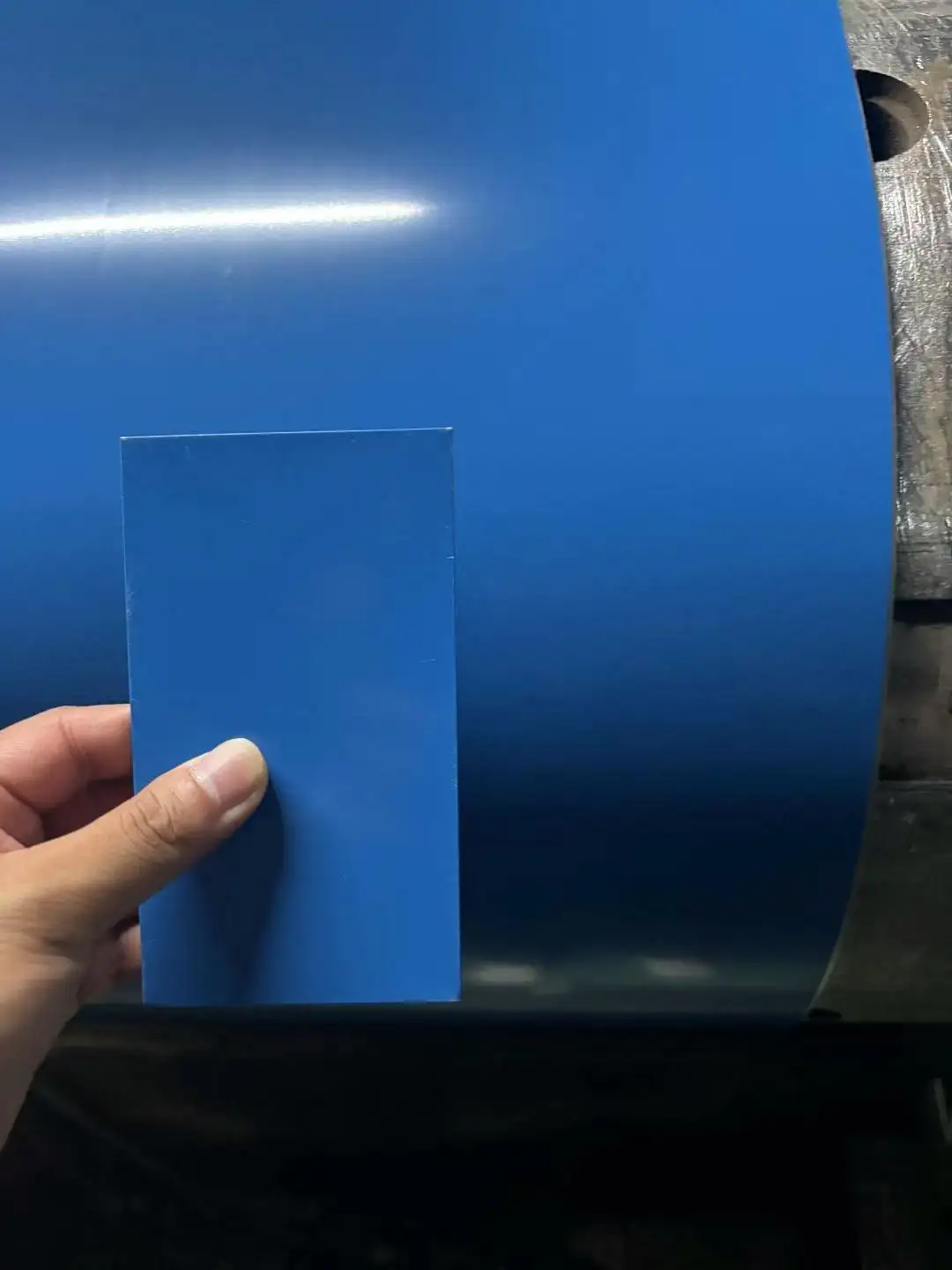
Key Quality Checks for Incoming Coils
Testing Paint Adhesion and Hardness
Paint adhesion determines how well the coating survives profiling and long-term service. You can test this with a cross-hatch test. Use a sharp blade to cut a grid pattern through the paint film down to the steel substrate. Apply pressure-sensitive tape over the grid, then pull it off quickly. Examine the cut area for paint removal. If paint flakes away from the steel, the adhesion quality fails to meet panel production standards.
Hardness testing requires a pencil hardness kit. Start with a soft pencil grade and work toward harder grades until you find the one that scratches the paint surface. The hardest pencil that fails to scratch the coating indicates its hardness level. Softer coatings scratch easily during handling and installation. They also wear faster in high-traffic areas where panels face frequent contact.
Measuring Coating Thickness and BMT
You need a micrometer to verify base metal thickness. Strip a small section of paint and zinc from a sample piece using chemical stripper or mechanical abrasion. Measure the exposed steel with the micrometer. Compare this reading to the BMT specified in your purchase order. Remember that standard tolerance allows ±0.02 mm variation. A reading of 0.48 mm on a “0.50 mm BMT” order falls within tolerance. A reading of 0.46 mm signals a problem.
You should also measure the total coated thickness on an unstripped sample. Subtract the BMT from this total to calculate the combined zinc and paint thickness. This calculation confirms that you received the specified zinc coating weight and paint film thickness. A magnetic thickness gauge provides quick readings without destroying the sample.
A foam bonding trial completes your verification process. Apply your specific foam formulation to a sample of the backcoat surface. Allow it to cure according to your production parameters. Then attempt to peel the foam away from the steel. Strong resistance indicates proper adhesion. Clean separation reveals a compatibility problem that will cause delamination in service.
Red Flags in Supplier Quotations
Vague Specifications and ‘Equivalent’ Grades
Some suppliers quote “equivalent to DX51D” or “similar to Z275” without providing traceable data. These vague descriptions hide the actual product quality. You cannot verify what you cannot specify. Demand exact grade designations, precise zinc coating weights, and named paint systems in every quotation. A supplier who cannot provide these details likely sources from inconsistent mills.
Lack of Mill Test Certificates (MTCs)
Every reputable steel mill issues a Mill Test Certificate for each coil. This document states the exact grade, chemical composition, mechanical properties, zinc coating weight, and paint system. Request MTCs before you approve payment. Review them carefully against your purchase order specifications. Discrepancies between the MTC and your order require immediate resolution.
A supplier who hesitates to provide MTCs has something to hide. Walk away from that quotation and find a supplier who documents their product openly.
Your verification process protects your production line and your reputation. These checks take less than an hour per coil. The cost of skipping them appears later as scrap panels, failed bonds, and customer complaints.
Start with your cold room’s operating temperature. This determines the required panel thickness. Then match your PPGI thickness, zinc coating, and paint system to that specification. Remember the fourth critical factor: back-coat adhesion. Without it, your panels delaminate regardless of other qualities.
The right PPGI is not a single product. It is a specification matched to your application. Food processing demands chemical-resistant topcoats and heavier zinc. Dry storage warehouses need less protection.
Provide your supplier with a detailed specification sheet. Include BMT, zinc coating weight, and backcoat requirements. Request a sample coil for trial production before committing to a large order. This verification step prevents costly mistakes.
FAQ
What is the difference between BMT and TCT?
BMT stands for base metal thickness. It measures only the steel substrate. TCT means total coated thickness. It includes the zinc layer and paint films. Always specify BMT in your purchase orders. Structural strength depends on the steel alone. Paint and zinc add no load-bearing capacity.
How do I choose the right zinc coating weight?
Match the zinc coating to your humidity level. Dry storage warehouses perform well with Z100. Food processing facilities need Z200 or Z275. Frequent washdowns and condensation demand heavier protection. Cut edges and scratches rely on zinc as a sacrificial reserve. Higher weights cost more but prevent premature corrosion.
Why does backcoat adhesion matter so much?
The backcoat bonds the steel facing to the foam core. A weak bond fails during temperature cycling. Delamination starts at panel edges and cutouts. Moisture enters the gap and accelerates corrosion. You should request a bonding trial with your specific foam formulation before full production.
Can I use 0.40 mm PPGI for a freezer room?
No. Freezer rooms operate between -18°C and -25°C. The temperature differential exceeds 40°C. This creates substantial thermal stress. You need 0.50 mm to 0.60 mm base metal thickness for structural rigidity. A 0.40 mm facing flexes excessively and leads to fatigue at connection points.
What should I check when coils arrive at my facility?
Measure the base metal thickness with a micrometer. Strip a small section of coating first. Perform a cross-hatch test to verify paint adhesion. Request Mill Test Certificates for every coil. Compare the documented grade, zinc weight, and paint system against your purchase order. These checks take less than an hour.
Do I need a special paint system for coastal installations?
Yes. Salt-laden air attacks standard polyester topcoats aggressively. You should upgrade to PVDF or a marine-grade paint system. These coatings resist salt attack for decades. You also need a heavier zinc coating like Z275. Cut edges and scratches require maximum sacrificial protection in coastal environments.
Why do some suppliers quote “equivalent” grades?
Vague descriptions hide inconsistent product quality. A supplier who cannot provide exact grade designations likely sources from multiple mills. Demand precise specifications in every quotation. Request traceable Mill Test Certificates before approving payment. Walk away from suppliers who hesitate to document their product openly.