

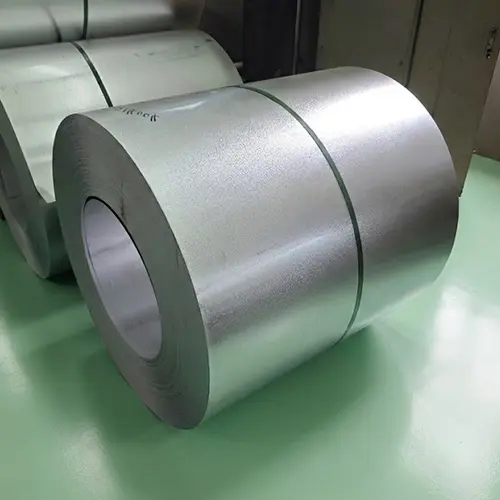
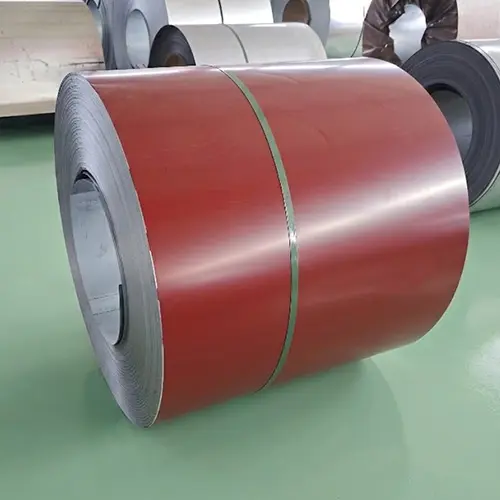

Two steel coils arrive at a roofing plant with identical thickness, color, and similar coating specs. On a real roof, they perform differently — one resists salt and moisture, the other corrodes. How can manufacturers evaluate corrosion resistance before installation?
Salt spray testing answers that question. This standardized accelerated test exposes samples to salt fog and compares coating performance under controlled conditions. Salt spray hours must not be converted into years of outdoor service life; real roofs face UV radiation, temperature swings, and wet-dry cycles.
Understanding why salt spray testing matters for roofing materials helps compare GI, PPGI, PPGL, and Aluzinc. This article explains the test procedure, applicable standards, and its role in material selection.
Key Takeaways
- Salt spray testing quickly compares how well roofing materials resist corrosion.
- The test exposes samples to a salt fog to mimic harsh environments.
- Salt spray hours do not directly predict years of outdoor service life.
- Choosing the right coating system, like GI, PPGI, PPGL, or Aluzinc, is crucial for corrosion resistance.
- Proper handling and installation prevent damage that leads to corrosion.
- Following standards like ASTM B117 and ISO 9227 ensures fair and repeatable test results.
- Salt spray testing helps manufacturers catch defects early and control quality.
- Use test results to select cost-effective materials for specific environments.
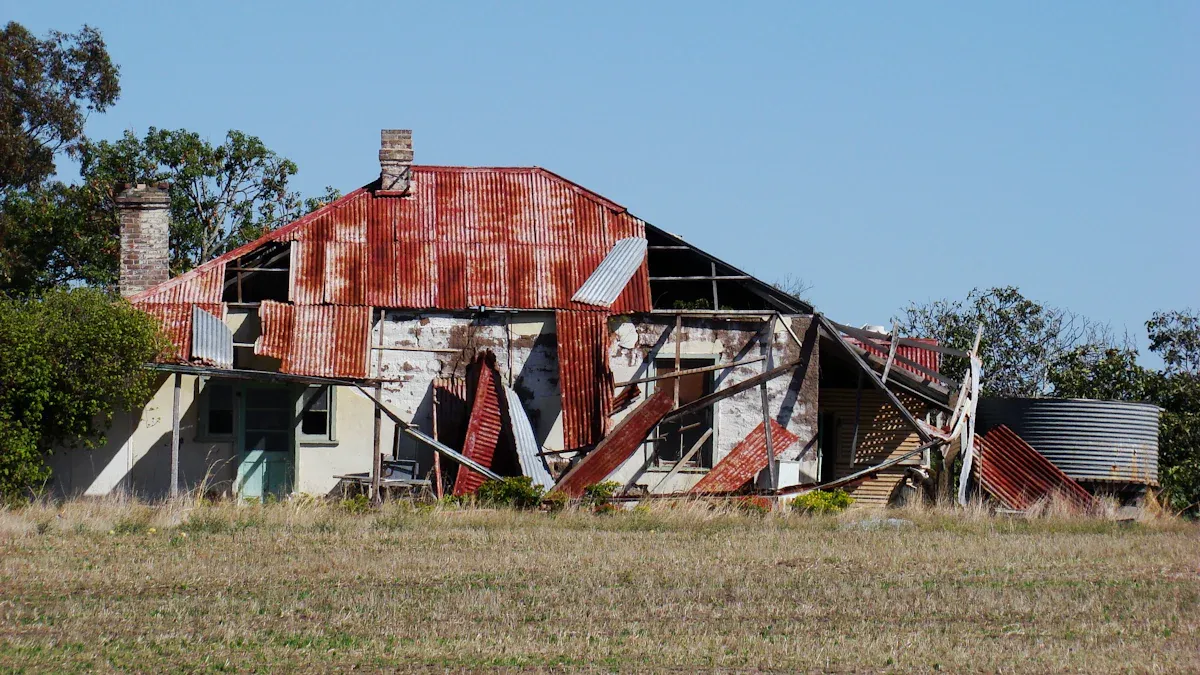
Why Corrosion Affects Roofing Materials
Environmental Drivers of Roofing Corrosion
Moisture, Humidity, and Rainfall
Water drives nearly every corrosion reaction on a metal roof. Rain, condensation, and high humidity keep the surface wet for extended periods. A wet surface allows oxygen and dissolved ions to reach the coating and base steel.
Salt in Coastal and De-Icing Environments
Salt is one of the most readily available and consistently corrosive substances on earth. Coastal air carries chloride particles that settle on roofing panels. Inland, de-icing salts splash onto roofs near highways and parking structures. These environments accelerate coating breakdown far faster than inland rural settings.
Temperature Cycles and UV Radiation
Daily heating and cooling expand and contract metal panels. This movement stresses coatings and can open hairline cracks. Ultraviolet radiation breaks down organic paint binders over time. The combination of thermal cycling and UV exposure weakens the protective layer.
Material Factors Behind Corrosion
Base Steel and Coating Type
The base steel grade and its metallic coating determine baseline corrosion resistance. Galvanized steel relies on zinc for sacrificial protection. Galvalume and Aluzinc coatings use aluminum-zinc alloys for different performance profiles. Each system behaves differently in salt-laden air.
Coating Thickness and Uniformity
Thicker coatings generally resist corrosion longer. Uniformity matters just as much. Thin spots or bare patches become initiation sites for rust. Manufacturers measure coating weight per unit area to verify consistency.
Cut Edges, Scratches, and Installation Damage
Cut edges expose bare steel with no metallic coating. Scratches from handling or fastening remove the protective layer. Installation damage creates entry points for moisture and chlorides. These defects often trigger corrosion before the coated surface shows any problem.
Consequences for Roofing Performance
Structural Integrity and Safety
Corrosion reduces the load-bearing capacity of panels and fasteners. Severe rust can perforate roofing sheets and weaken connections. This degradation threatens worker safety and building integrity.
Aesthetic Degradation and Color Fading
Rust stains and chalking ruin the appearance of a roof. Color fading from UV exposure and coating breakdown lowers property value. Building owners often replace panels for cosmetic reasons alone.
Maintenance and Replacement Costs
Corroded roofs demand frequent inspections and repairs. Premature replacement disrupts operations and strains budgets. Corrosion affects not only panels but also fasteners, flashing, and protective finishes. These secondary components often fail first and drive up total repair costs.
How to Improve Corrosion Resistance
Corrosion resistance begins before a roof panel meets the elements. Material choice, coating design, and site practice determine how long a roof survives. Manufacturers can control each of these factors to extend service life.
Choosing the Right Coating System
Every coating system protects steel by a distinct mechanism. The local environment should drive the selection. A coastal building demands a different system than an inland warehouse. Matching the coating to the site prevents early failure.
Galvanized Steel (GI)
GI carries a pure zinc coating. Zinc corrodes preferentially, sacrificing itself to protect the steel beneath. This sacrificial action works well in inland, low-chloride areas. Budget-conscious projects often choose GI. However, heavy salt exposure consumes zinc quickly. The coating resists rust only as long as zinc remains. Thicker GI coatings serve industrial sheds well.
Pre-Painted Galvanized Iron (PPGI)
PPGI adds a paint layer over galvanized steel. The paint blocks moisture and oxygen while delivering color. It performs well in moderate climates with steady rainfall. Cut edges stay vulnerable because the paint cannot cover them completely. Residential roofs frequently use PPGI for appearance and reasonable cost.
Pre-Painted Galvalume Steel (PPGL)
PPGL combines an aluminum-zinc alloy with a paint finish. Aluminum contributes long-term barrier protection. Zinc supplies sacrificial edge protection. This dual action improves resistance to salt-laden air. Coastal buildings commonly specify PPGL for roofing and cladding systems. The paint layer hides minor surface imperfections.
Aluzinc Steel
Aluzinc steel belongs to the same aluminum-zinc alloy family. Its composition balances the two metals to optimize performance. The coating resists oxidation and reflects solar heat. Architects select Aluzinc for industrial projects in humid or moderately salty regions. This makes it a strong alternative to PPGI in coastal zones.
Optimizing Coating Thickness and Surface Treatment
Coating weight directly influences lifespan. Thicker coatings delay corrosion in aggressive environments. Uniformity matters equally because thin spots become initiation sites for rust. Manufacturers measure coating weight per unit area to verify consistency. Production checks catch weak areas before shipment.
Surface treatment adds another defense layer. Passivation or a conversion coating promotes paint adhesion and seals microscopic pores. A clean surface allows the chemical treatment to bond tightly. These steps reduce the risk of blistering and underfilm corrosion. Together, thickness and treatment decide real-world performance.
Proper Handling, Storage, and Installation
A quality coating fails quickly once damaged. Workers should lift panels rather than drag them across rough surfaces. Storage requires a dry area with airflow so trapped moisture cannot condense. Protect coils from rain and ground splash before installation. Simple site rules preserve the coating.
Installation practices matter just as much. Use fasteners compatible with the coating to avoid galvanic corrosion. Seal cut edges and scratches promptly with approved compounds. Each small defect later becomes a corrosion site. Careful handling closes the gap between tested samples and real roofs.
What Is a Salt Spray Test?
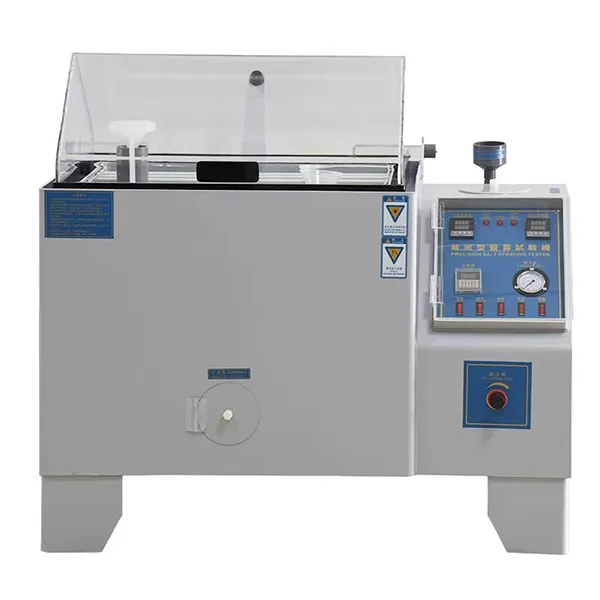
A salt spray test exposes coated or plated metal samples to a continuous fog of saline solution inside a sealed chamber. The method screens coatings, paints, plating, and base metals for performance in salt-laden environments. Manufacturers use it to compare how different roofing materials resist corrosion before they reach a job site.
The test belongs to a family of standardized accelerated corrosion tests. It does not simulate every real-world condition. A real roof faces wet and dry cycles, temperature swings, ultraviolet radiation, rain, and humidity changes. The salt fog chamber applies one constant aggressive condition. That limitation makes the test a comparison tool, not a service-life predictor. Understanding why salt spray testing matters for roofing materials starts with this distinction.
Definition and Basic Principle
Accelerated Corrosion Testing Explained
Accelerated corrosion testing compresses months or years of environmental exposure into a short laboratory run. The test raises the concentration of corrosive agents and holds conditions steady. This approach reveals weaknesses in a coating system quickly. A sample that fails after a few hundred hours in the chamber likely has a defect that would appear early on a real roof.
The acceleration factor varies by material and environment. No single multiplier converts chamber hours into outdoor years. Engineers treat the results as a ranking tool. Material A outperforming Material B in the chamber suggests Material A will also outperform Material B outdoors, all else being equal.
The Salt Fog Chamber Concept
A salt fog chamber is a sealed enclosure with a reservoir of saline solution, an atomizer, and a controlled heating system. The atomizer creates a fine mist that fills the chamber. Samples hang inside at a fixed angle. The chamber maintains constant temperature and fog density throughout the test.
The design ensures every sample sees the same conditions. This uniformity allows direct comparison between materials. A chamber that drifts in temperature or fog output produces unreliable results. Regular calibration keeps the test valid.
What the Test Controls
Salt Solution and Concentration
The test solution mimics seawater salinity. ASTM B117 specifies a sodium chloride concentration of 5 percent by mass in water. The solution must have a pH between 6.5 and 7.2 when measured at 25 degrees Celsius. These values come directly from the standard. Manufacturers prepare fresh solution regularly to avoid concentration drift.
Temperature, pH, and Exposure Time
ASTM B117 sets the chamber temperature at 35 degrees Celsius. ISO 9227 uses the same temperature for neutral salt spray. The pH range stays near neutral for NSS. Exposure time varies by product type, standard, and application. A test might run for 96 hours, 500 hours, or 1,000 hours. No single duration applies to all products.
Specimen Position and Angle
Samples sit at a specific angle inside the chamber. ASTM B117 recommends a angle of 15 to 30 degrees from vertical. This orientation allows the fog to condense and run off naturally. The standard also specifies minimum spacing between samples. Proper positioning prevents one sample from shielding another.
What the Test Reveals
Red Rust and White Corrosion Products
Red rust indicates base steel corrosion. White or gray deposits signal zinc or aluminum coating corrosion. Inspectors record the time to first red rust and the time to first white rust. These observations show how long the metallic coating protects the steel beneath.
Blistering, Peeling, and Coating Damage
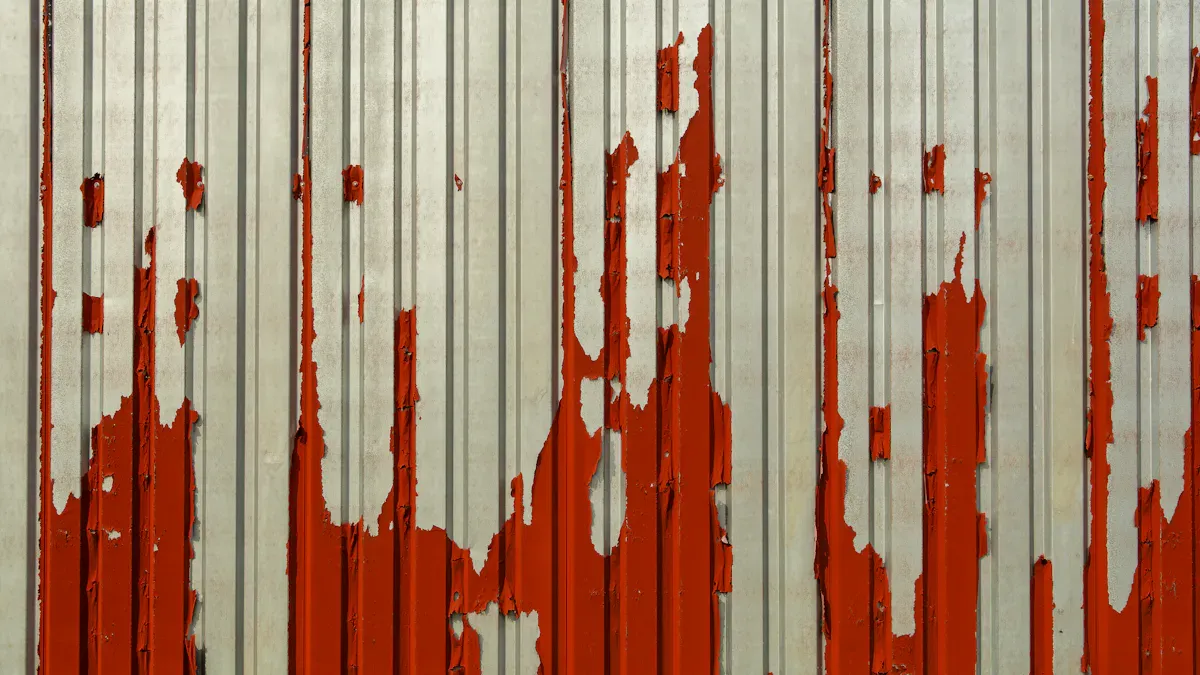
Paint layers can blister, peel, or crack under salt fog exposure. Blisters form when moisture penetrates the coating and lifts it from the substrate. Peeling shows lost adhesion. These defects expose the underlying metal and accelerate failure. Inspectors rate blistering and peeling using standardized scales.
Corrosion Spread and Substrate Attack
The test also measures how far corrosion spreads from a scribe or cut edge. A scribe line simulates installation damage. Corrosion creep under the coating reveals poor edge protection. Severe substrate attack means the coating system cannot protect the steel in aggressive environments.
How a Salt Spray Test Works
A salt spray test follows a defined sequence. Each step influences the final result. Technicians control every variable to keep the comparison fair.
Step 1 — Prepare the Sample
Selecting GI, GL, PPGI, or PPGL Specimens
Material selection depends on the question under study. A manufacturer comparing galvanized steel against Galvalume picks one sample of each. The samples should share similar dimensions and coating weights when the goal is a direct comparison. Test duration varies by product type, standard, and application. A PPGI sample might run for 500 hours while a bare GI sample runs for 96 hours. No single duration fits every product.
Cleaning, Cutting, and Edge Protection
Samples require careful preparation before testing. Technicians clean each specimen with a suitable solvent to remove oil, dust, and fingerprints. They cut samples to a standard size and may protect edges with tape or wax. Edge protection prevents premature corrosion at cut faces. A scribe line sometimes simulates a scratch or installation damage.
Step 2 — Place the Sample in the Chamber
Specimen Orientation and Spacing
Sample position affects fog deposition. ASTM B117 recommends an angle of 15 to 30 degrees from vertical. This angle lets the fog condense and drain naturally. Technicians record the exact orientation for each sample. Consistent placement allows valid comparisons between test runs.
Avoiding Contact Between Samples
Samples must not touch each other or the chamber walls. Contact creates shielded areas where fog cannot reach. It also allows corrosion products to transfer between specimens. Technicians use non-reactive racks or hooks to hold each sample separately. Proper spacing ensures every surface receives equal fog exposure.
Step 3 — Generate Salt Fog
Atomization and Fog Distribution
An atomizer converts the saline solution into a fine mist. The chamber fills with fog at a controlled rate. ASTM B117 specifies a sodium chloride concentration of 5 percent by mass. The chamber temperature stays at 35 degrees Celsius. A well-designed chamber distributes fog evenly so no sample receives more exposure than another.
Maintaining Continuous Exposure
The test runs without interruption for the full duration. Technicians monitor the solution level, temperature, and fog output. They refill the reservoir as needed to maintain constant conditions. Any drift in temperature or concentration invalidates the results. Continuous exposure ensures the test reflects the intended accelerated environment.
Common Salt Spray Testing Standards
Standards give salt spray testing a shared language. They define the chamber, the solution, the temperature, and the way technicians record results. Two laboratories in different countries can run the same test and compare data directly. This consistency makes the method useful for material selection and quality control.
One point deserves emphasis before the standards themselves. ASTM B117 does not necessarily correlate to real-world corrosion performance. A real roof faces wet and dry cycles, temperature fluctuations, UV radiation, rain, and humidity changes. A continuous salt fog holds one condition without pause. The test ranks materials under controlled conditions. It does not predict how many years a panel will last outdoors.
ASTM B117 — Salt Spray Apparatus
ASTM B117 is the foundational standard for salt spray testing. It describes the apparatus, the test conditions, and the procedure for operating a neutral salt fog chamber. The standard specifies a sodium chloride concentration of 5 percent by mass and a chamber temperature of 35 degrees Celsius. It also sets the pH range and the recommended specimen angle.
The standard focuses on the apparatus and the operating conditions. It does not prescribe pass or fail limits for specific products. Manufacturers and buyers set their own acceptance criteria based on the application. This flexibility explains why ASTM B117 appears across so many industries, from automotive to construction.
ISO 9227 — Artificial Atmosphere Corrosion Tests
ISO 9227 is the international counterpart to ASTM B117. It covers corrosion tests in artificial atmospheres and includes neutral salt spray among its methods. The standard aligns closely with ASTM B117 on temperature and solution concentration. Laboratories in Europe and Asia often cite ISO 9227 instead.
The standard serves the same purpose: a repeatable accelerated test for comparing coating systems. It also defines evaluation criteria for tested specimens. Buyers working with international suppliers should confirm which standard the test report references.
Neutral Salt Spray (NSS) and Other Environments
Neutral salt spray is the baseline method. The solution stays near neutral pH, and the test suits most coated steel products. Two accelerated variants exist for more aggressive screening.
| Test Method | Solution Modification | Typical Use |
|---|---|---|
| NSS | Neutral pH sodium chloride solution | General coating and plating evaluation |
| AASS | Acetic acid added to lower pH | Decorative coatings, anodized aluminum |
| CASS | Acetic acid plus copper chloride | Aggressive screening for plated parts |
Acetic Acid Salt Spray (AASS)
AASS adds acetic acid to the saline solution. The lower pH makes the fog more aggressive than neutral salt spray. This method suits decorative coatings and anodized surfaces. It reveals weaknesses that NSS might miss over a short run.
Copper-Accelerated Acetic Acid Salt Spray (CASS)
CASS adds copper chloride along with acetic acid. The copper ions accelerate attack on plated parts. This method provides the harshest screening among the three. Manufacturers use it when they need fast answers about coating quality.
Tips for Accurate Salt Spray Testing
Salt spray testing earns trust only when the method stays consistent from sample preparation to final evaluation. Careless handling, drifting chamber settings, or uneven documentation can distort results. The following practices keep comparisons fair and repeatable.
Sample Preparation Best Practices
Consistent Cleaning and Handling
Technicians clean every specimen the same way before testing. A solvent wash removes oil, dust, and fingerprints. Fingerprint salts create corrosion spots unrelated to coating quality.
Technicians handle clean specimens with clean gloves. Bare hands transfer grease onto the test surface. Preparing the whole batch in one pass keeps the treatment equal for every sample.
Proper Edge and Scratch Protection
Cut edges expose bare steel where fog concentrates. Unless the test targets edge behavior, technicians seal cut edges with tape or wax. This prevents failure at an unrealistic site.
Technicians apply a scribe of fixed depth and length for scratch resistance tests. Identical scribing tools and templates keep the artificial damage consistent across all samples.
Chamber Operation and Maintenance
Calibration and Solution Preparation
Temperature sensors and pH meters need calibration before each run. The air-pressure regulator driving the atomizer also matters. Any drift changes how much salt lands on the samples.
ASTM B117 specifies 5 percent sodium chloride by mass with a pH between 6.5 and 7.2 for NSS. Fresh solution uses reagent-grade salt and deionized water. Technicians collect run-off from the chamber during the run and check its pH.
Avoiding Contamination and Cross-Interference
Clean the chamber before every run. Residue from a previous test alters the fog chemistry. Different metals should not share the same run because corrosion products can drip onto neighboring samples.
Deionized water prevents mineral contamination that changes pH and conductivity. Chamber walls, racks, and collection funnels need periodic inspection for scale or rust.
Evaluation and Documentation
Using Standardized Rating Systems
Evaluators should use standard rating methods rather than personal impressions. ASTM D610 rates rust by percentage of affected area. ASTM D714 rates blistering by size and frequency. ASTM D1654 measures creep from a scribe.
Engineers set pass-fail thresholds before the test starts. A roofing supplier might reject a sample with red rust after 500 hours while accepting another with only light surface staining. Standardized scales make the decision objective.
Photographing and Recording Results Consistently
Photographs document what rating numbers condense. The camera, light source, and distance remain fixed for every shot. A scale ruler beside the specimen shows true blister sizes.
Technicians log the time to first red rust and white rust, plus scribe creep readings. Chamber temperature and pH data back the results, letting another lab repeat the test.
Why Salt Spray Testing Matters for Roofing Materials
Salt spray testing gives manufacturers a practical way to validate the longevity and reliability of metal parts and surface treatments before those products earn operational approval. A roofing supplier can screen a new coating batch, a fresh pretreatment line, or a changed fastening system without waiting years for outdoor exposure data. This early validation protects builders from installing materials that fail within the first rainy season.
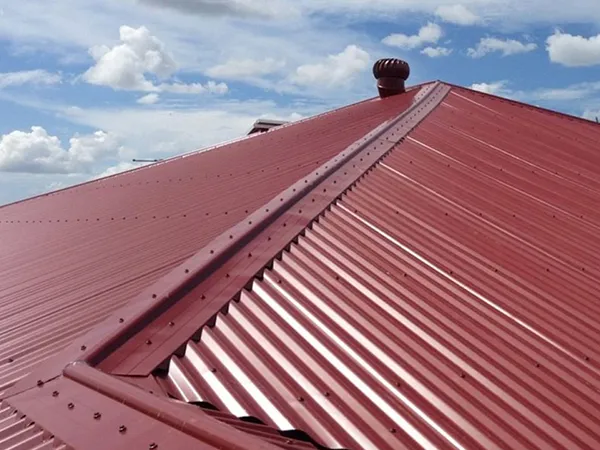
The test applies far beyond roofing sheets. Panels, fasteners, flashing, ridge caps, and protective finishes all face salt-laden air and moisture. A coated screw can fail before the panel it holds. Flashing details trap water and chlorides in ways that accelerate local attack. Testing each component confirms that the whole roofing assembly performs as a system, not just the most visible surface.
Quick and Controlled Results
A salt spray chamber delivers corrosion data in days or weeks rather than years. A 500-hour test runs in about three weeks of continuous operation. That timeline lets a manufacturer catch a coating defect before shipping a full production run. The controlled environment removes weather variability from the comparison. Every sample sees the same temperature, fog density, and solution chemistry.
This control creates a fair playing field. Two coating suppliers can submit samples to the same laboratory and receive directly comparable results. A purchasing team can then rank materials on measured performance rather than marketing claims. The speed of the method also supports iterative product development. Engineers adjust a pretreatment step, retest, and see the effect within a single production cycle.
Quality Improvement and Process Control
Salt spray testing functions as an ongoing quality screen. A manufacturer runs periodic samples from the production line to detect process drift. A change in coating weight, curing temperature, or surface preparation shows up as a shift in test results. Catching that drift early prevents thousands of defective panels from reaching the market.
The test also validates new suppliers and raw materials. When a coil supplier changes its zinc bath chemistry, the roofing manufacturer can verify that corrosion performance holds steady. This practice turns salt spray testing into a process-control tool rather than a one-time qualification step. Consistent results over many batches build confidence in the production system.
One caveat deserves emphasis here. Salt spray hours are a controlled comparison tool, not a direct predictor of outdoor service life. ASTM B117 itself notes that no direct correlation exists between salt spray results and outdoor performance. No documented conversion turns 24, 48, 96, or 192 hours into a fixed number of real-world years. Corrosion engineers state that the corrosion mechanism in salt spray differs fundamentally from real-life exposure. The test serves as an ongoing QA screening tool rather than a life predictor.
Ted Mooney, P.E., explains that salt spray cabinets produce a corrosion mechanism fundamentally different from outdoor exposure. Galvanized roofing steel, for instance, can show wet-storage stain and poor salt spray results, yet it can last for decades on a real roof because protective zinc carbonate corrosion products form slowly only in contact with atmospheric CO2. Therefore, salt spray hours are best treated as a QA/process-control screen, not as convertible to years of service life.
Experts recommend choosing salt spray acceptance limits only as ballpark benchmarks for the expected service environment. A long-service target such as 30 years might reasonably call for a high salt spray endurance, around 2000 hours to first red rust. That figure is a specification benchmark, not a conversion. Actual durability depends on coating type, pretreatment, and the specific environment. Real roofs face rain, CO2, UV, wet and dry cycles, and physical damage. Continuous salt fog replicates none of these conditions.
Cost-Effective Material Selection
Material selection drives total project cost. A builder who specifies an underperforming coating saves money at purchase and pays far more in premature replacement. Salt spray testing helps buyers avoid that trap. A side-by-side comparison of GI, PPGI, PPGL, and Aluzinc samples reveals which system suits a coastal or industrial site.
The test also prevents over-specification. A project in a mild inland climate may not need the most expensive coating system. Test data lets a buyer match coating performance to the actual exposure. That match reduces material cost without sacrificing durability. For a large roofing project, the savings from avoiding an unnecessary upgrade can be substantial.
Understanding why salt spray testing matters for roofing materials helps procurement teams make informed decisions. The method delivers quick results, supports quality control, and enables cost-effective comparison across coating systems. It validates panels, fasteners, flashing, and finishes before they reach a job site. Buyers who treat salt spray hours as a controlled benchmark, not a service-life guarantee, get the most value from the data.
Salt spray testing offers a practical, reliable way to compare corrosion resistance across GI, PPGI, PPGL, and Aluzinc steel. Why salt spray testing matters for roofing materials comes down to one key point: salt spray hours serve as a controlled comparison tool, not a direct predictor of outdoor service life. The method delivers quick results, supports quality control, enables cost savings, and guides informed material selection. Reliable equipment matters, and the Presto Enviro Salt Spray Test Chamber provides accurate, repeatable corrosion testing. As coastal and industrial markets demand durable roofing products, testing will remain essential for delivering materials that perform.
FAQ
What is the difference between neutral salt spray, AASS, and CASS?
NSS uses a neutral pH sodium chloride solution for general coating evaluation. AASS adds acetic acid, creating a more aggressive fog for decorative coatings. CASS combines copper chloride with acetic acid for the harshest screening. Each method increases severity for specific material classes.
Why can’t salt spray hours convert into outdoor service years?
The salt fog chamber runs continuous harsh conditions. Real roofs face rain, UV radiation, temperature swings, and wet-dry cycles. ASTM B117 itself states no direct correlation exists between salt spray results and outdoor performance. The test ranks materials; it does not predict lifespan.
Which standards apply to salt spray testing?
ASTM B117 describes the salt spray apparatus and neutral fog conditions. ISO 9227 serves as the international counterpart. Both specify 5 percent sodium chloride concentration and 35 degrees Celsius chamber temperature. Laboratories choose one based on regional practice.
How should samples be prepared before a salt spray test?
Technicians clean specimens with solvent to remove oil and fingerprints. They seal cut edges with tape or wax unless edge performance is the focus. Clean gloves prevent grease transfer. Preparing the whole batch in one pass keeps conditions equal.
What results does a salt spray test reveal?
The test shows when red rust appears on base steel and when white rust forms on zinc or aluminum coatings. It exposes blistering, peeling, and corrosion spread from scribe lines. Inspectors use standardized scales to rate these defects objectively.
How long does a salt spray test typically run?
Duration depends on product type, standard, and application. Runs can last 96, 500, or 1,000 hours. A 500-hour test takes about three weeks of continuous operation. Manufacturers set acceptance limits based on the target service environment.
Which roofing components require salt spray testing?
Manufacturers test panels, fasteners, flashing, ridge caps, and protective finishes. A coated screw can fail before the panel it holds. Flashing traps water and chlorides, accelerating local corrosion. Testing all components confirms the entire assembly performs as a system.
What equipment supports accurate salt spray testing?
A sealed chamber holds the saline solution and atomizer. The atomizer creates fine mist at controlled temperature. Specimens sit at 15 to 30 degrees from vertical. Regular calibration of temperature sensors and pH meters keeps results reliable.