GI vs PPGI for Rolling Doors: Which Steel Coil Should Manufacturers Choose?
Selecting the right steel coil is a critical decision for rolling door and roller shutter manufacturers. Your chosen material directly impacts roll‑forming performance, surface aesthetics, corrosion resistance, production efficiency and the long‑term quality of finished shutters.
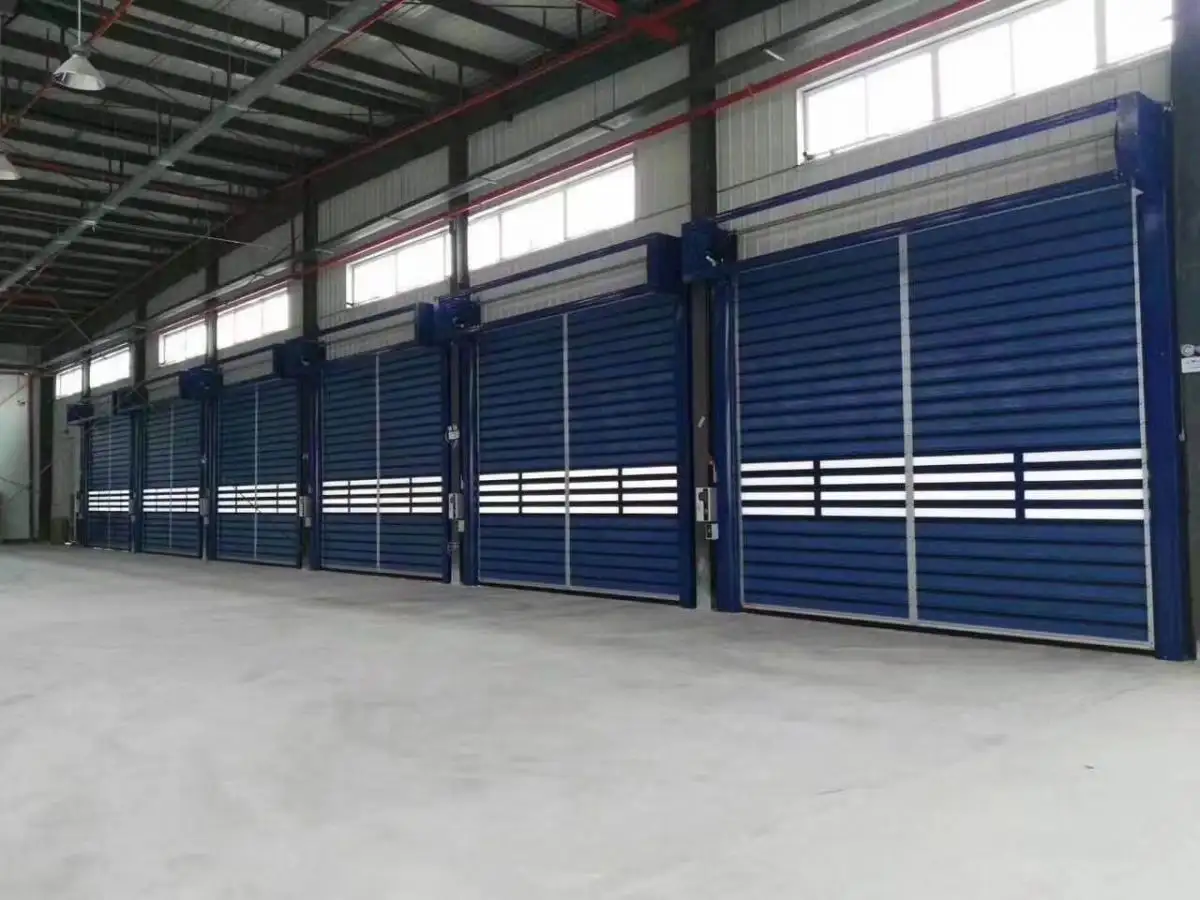
(GI vs PPGI )Galvanized steel coil (GI) and prepainted galvanized steel coil (PPGI) are the two most widely used substrates for rolling door components. Both can work well when their mechanical properties, dimensions and coating systems match your target profile, yet they serve distinct production workflows and end‑market demands.
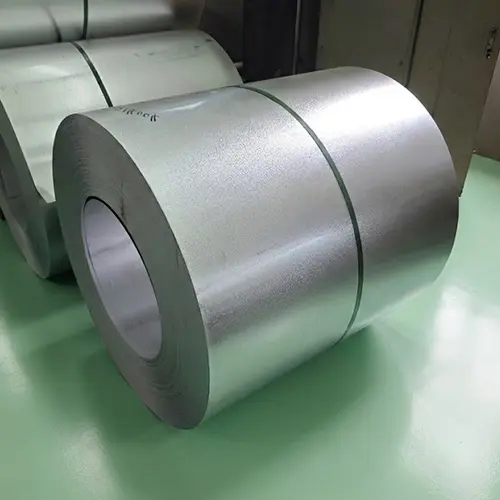
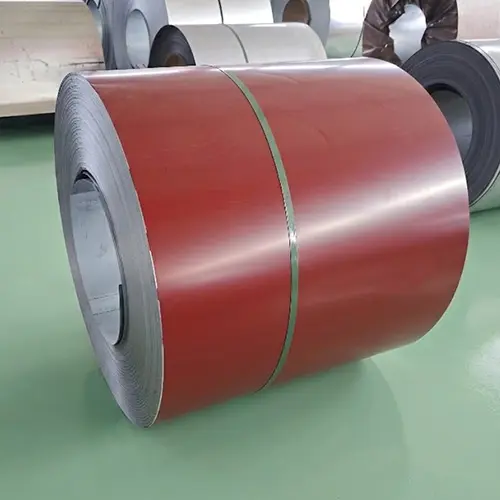
GI features a pure zinc metallic coating, ideal for projects that accept a silver galvanized finish or require on‑site/post‑forming painting. PPGI adds a factory‑baked organic topcoat, letting you produce colour‑matched rolling door slats without a separate painting stage.
Neither material is universally stronger, easier to form or longer‑lasting across all operating environments. This blog breaks down the core differences between GI and PPGI, their practical impact on rolling door fabrication, and the key checks manufacturers must complete before placing steel coil orders.
1. What Are GI and PPGI Steel Coils?
Galvanized Steel Coil (GI)
GI is carbon steel substrate coated with
zinc via the continuous hot‑dip galvanizing process. The zinc layer delivers corrosion protection in two ways: as a physical barrier isolating steel from moisture, and through sacrificial cathodic protection if minor coating damage occurs.
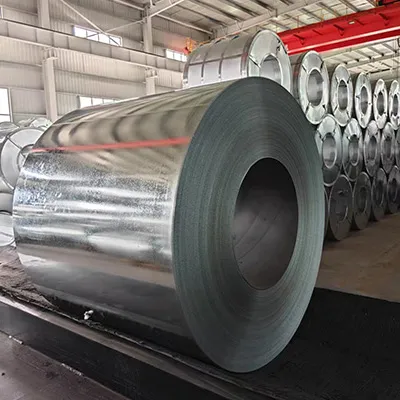
The standard ASTM A653/A653M governs hot‑dip zinc‑coated and zinc‑alloy coated steel sheet, supplied in coils or cut‑to‑length sheets. It defines multiple steel grades and zinc coating weights for different service conditions.
For rolling door production, GI provides a natural metallic zinc surface ready for roll forming. If your finished shutter requires custom colours, GI can go through painting, powder coating or other finishing processes after profiling.
Prepainted Galvanized Steel Coil (PPGI)
PPGI uses galvanized steel as its base substrate, with a multi‑layer organic coating applied in a continuous coil coating line. The full coating sequence includes surface cleaning & pre‑treatment, primer application, topcoat finishing and thermal curing. The finished material combines the anti‑corrosion benefit of zinc with a decorative, protective paint film.

As defined by the European Coil Coating Association (ECCA), coil coating is an industrial process where paint is applied to flat metal strip before stamping, bending or roll forming.
For rolling door manufacturers, PPGI arrives with a ready coloured surface before entering the roll former. The critical caveat: its paint system must have sufficient flexibility to withstand bending and deformation without cracking during profile shaping.
2. GI vs PPGI: Key Differences at a Glance
| Comparison Factor |
GI Steel Coil |
PPGI Steel Coil |
| Base Substrate |
Steel with hot‑dip zinc coating |
Galvanized steel + organic paint layers |
| Surface Finish |
Raw metallic zinc finish |
Factory pre‑finished coloured / textured coating |
| Corrosion Protection |
Zinc barrier + sacrificial protection |
Zinc coating plus sealed paint barrier system |
| Forming Performance |
Determined by steel grade, thickness and profile bend |
Determined by steel grade, profile geometry and paint flexibility |
| Colour Options |
No integrated colour; post‑painting required |
Custom colour selected at coil production (RAL etc.) |
| Production Workflow |
Roll forming + optional post‑finishing |
Direct roll forming with pre‑finished surface |
| Surface Handling |
Prevent scratches on zinc layer |
Extra care needed to avoid permanent paint scratches |
| Core Specs to Audit |
Steel mechanical properties & zinc coating mass |
Steel properties, zinc coating and full paint system |
PPGI is NOT inherently higher‑strength steel. When both use identical base steel substrate, GI and PPGI share nearly the same mechanical values. The paint film adds decoration and extra barrier protection — it does not increase tensile or yield strength. Always compare full material specifications instead of judging by the “GI / PPGI” name alone.
3. How GI and PPGI Affect Rolling Door Manufacturing
Rolling shutters are shaped by progressive roll forming stands, which gradually bend flat steel strip into interlocking slat profiles. During forming, the material undergoes repeated bending, local stretching and contact with tooling. Material selection must balance mechanical formability and surface integrity.
Roll‑Forming Performance
Steel grade, base metal thickness, yield strength, elongation, minimum bend radius and profile design all govern forming behaviour. Higher yield strength material demands more forming force and tends to show greater springback under identical machine settings. Final results also depend heavily on roll tool geometry and forming pass sequence.
For GI, verify that the substrate can be bent into your shutter profile without cracking, tearing or excessive distortion.
For PPGI, you have one extra risk to validate: whether the paint layer can stretch and bend alongside the steel without flaking or cracking.
The National Coil Coating Association (NCCA) highlights coating flexibility, scratch resistance and tool compatibility as core evaluation criteria for prepainted metal forming.
Yield Strength and Elongation
Yield strength marks the stress point where steel starts permanent plastic deformation. Elongation indicates ductility under tensile testing. These two metrics are far more reliable than vague descriptions such as “soft steel” or “hard steel”.
Two coils with identical thickness can behave very differently on your roll line if their mechanical specs differ. A high‑strength grade may suit structural loading requirements, but you must confirm your forming line has the capacity to process it. Always ask suppliers for certified mechanical test reports for your ordered grade.
Paint Cracking and Surface Scratches (PPGI Specific Risk)
PPGI’s organic coating is the main failure point during production. Cracks appear when the paint formulation cannot accommodate the bending strain of your slat profile.
Scratches commonly stem from worn forming rolls, insufficient clearance, misaligned guides or careless material handling.
NCCA recommends T‑bend testing to quantify coating flexibility, and stresses regular tool maintenance to avoid surface damage.
Before mass adoption of a new PPGI grade for a rolling door profile, run a production trial on your actual roll‑forming machine.
4. Steel Thickness and Grade: What Should Manufacturers Check?
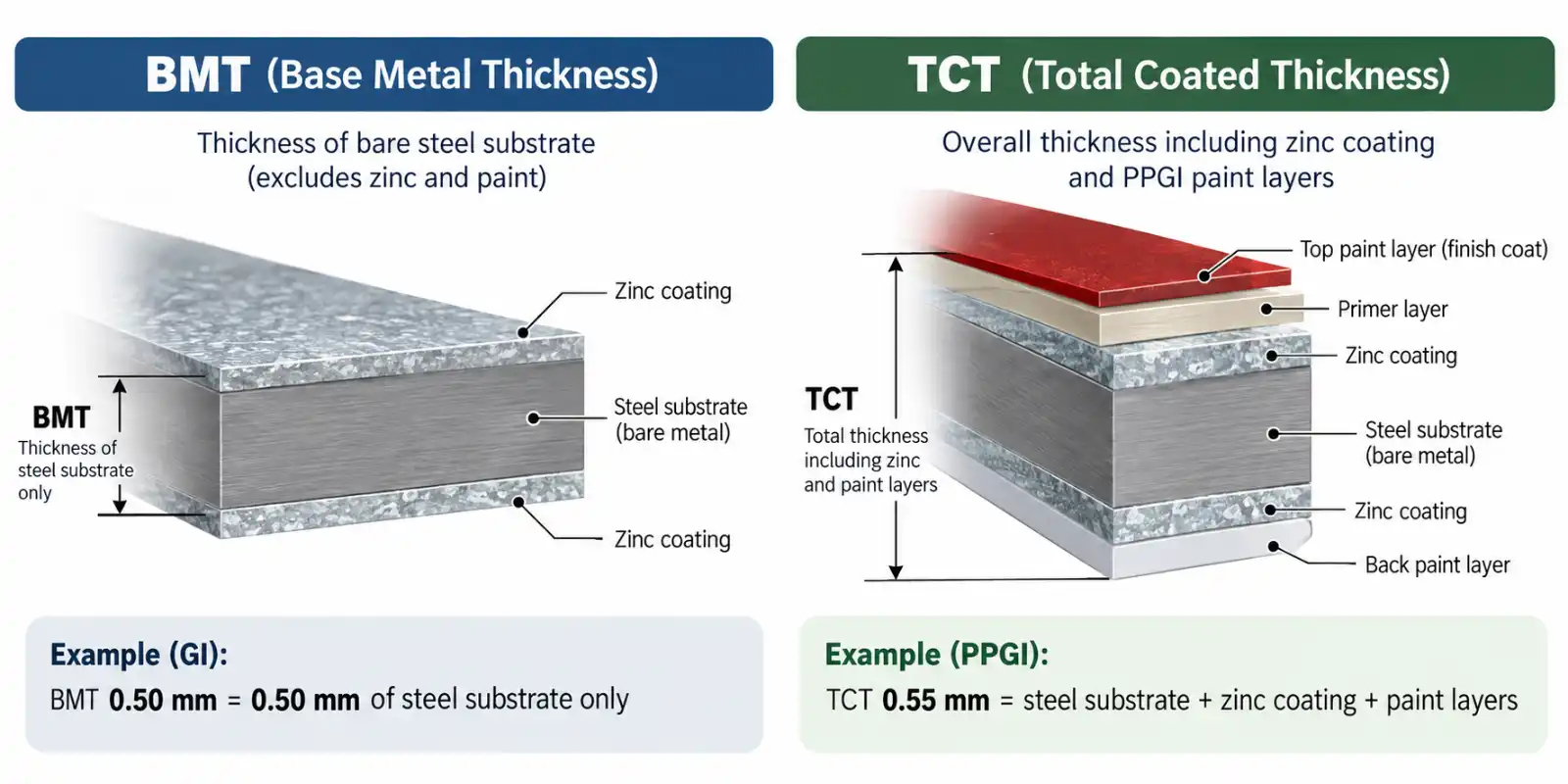
Thickness is one of the most frequently misquoted specs in rolling door steel sourcing. The first rule: distinguish between
Base Metal Thickness (BMT) and
Total Coated Thickness (TCT).
- BMT: thickness of bare steel substrate (excludes zinc and paint)
- TCT: overall thickness including zinc coating and PPGI paint layers
Coating layers add measurable thickness. You and your supplier must explicitly agree which measurement standard applies. A quote stating simply “0.50 mm steel coil” is ambiguous unless BMT/TCT definition and thickness tolerance are written clearly.
Steel grade is equally critical. Narrow profiles with tight bends demand higher ductility, while wide, gently curved slats prioritize structural stiffness.
Confirm these items with your supplier:
- Required thickness and measurement standard (BMT / TCT)
- Steel grade and reference standard
- Yield strength & tensile strength
- Minimum elongation
- Thickness tolerance range
- Profile drawing and minimum bend radius
No single thickness or grade works for all rolling door designs.
5. Corrosion Resistance: Is GI or PPGI Better?
Both GI and PPGI deliver corrosion protection, but long‑term performance depends on the full coating system and the site’s exposure environment. There is no universal winner.
Corrosion Protection of GI
GI relies entirely on its hot‑dip zinc coating. Zinc coating weight is the key specification — more zinc mass means longer sacrificial protection.
ASTM A653/A653M defines standardized zinc coating classes, so not all galvanized coils offer equal rust resistance. Never order “GI coil” without specifying the zinc coating designation.
Corrosion Protection of PPGI
PPGI stacks the organic paint barrier on top of the zinc layer. When properly formulated and applied, the topcoat blocks moisture, salt and pollutants from reaching the zinc.
However, performance hinges on the full system: substrate quality, chemical pre‑treatment, primer, topcoat dry film thickness and coating factory quality control. Having paint on the surface does not automatically guarantee superior rust resistance in every scenario.
Cut Edges and Damaged Zones
Cutting, punching and forming inevitably expose bare steel edges or chip coatings locally. These vulnerable spots are especially high‑risk for shutters installed in humid, coastal or industrial atmospheres.
For seaside or heavy‑industry projects, review the complete corrosion package and edge protection plan. Service life cannot be guaranteed just by picking GI or PPGI.
6. Appearance and Surface Quality
Visual finish is the most obvious difference between GI and PPGI.
GI retains the natural metallic galvanized look; spangle pattern and surface texture depend on the galvanizing process selected. If your customer requires custom colours, you will need a secondary painting process after forming.
PPGI arrives pre‑coloured, which makes it popular for storefront shutters, commercial facades and visible building openings where consistent colour matching matters.
Consistent colour results require more than selecting a RAL code. Lock in the coating type, gloss level, colour tolerance and signed‑off colour sample before bulk order.
PPGI also needs strict handling controls during slitting, forming, stacking, packing and installation to avoid permanent scratches.
7. GI vs PPGI: Which Has the Lower Production Cost?
Raw coil price per tonne is only one piece of your total manufacturing cost.
GI often carries a lower upfront material cost vs equivalent PPGI, but confirm with apples‑to‑apples quotations (same steel grade, thickness and zinc weight). If your finished rolling door needs painting, add costs for surface prep, paint, consumables, labour, booth operation and rework.
PPGI removes post‑forming painting steps, yet it adds costs tied to coating flexibility testing, careful handling and higher scrap loss if paint cracks during forming.
| Cost Factor |
GI |
PPGI |
| Coil purchase price |
Subject to specs & market |
Subject to substrate + paint system |
| Secondary painting |
Often required |
Usually eliminated |
| Roll forming |
Required |
Required, with gentler handling |
| Surface protection |
Needed for zinc |
Needed for paint finish |
| Scrap & rework |
Linked to forming defects |
Linked to paint cracking / scratches |
| QC scope |
Steel + zinc coating |
Steel + zinc + full paint system |
The right comparison metric is
cost per acceptable finished slat. A cheaper coil per tonne can become more expensive if it creates extra finishing, rejection and rework. Calculate based on your own shop floor data.
8. Suitable Applications for GI and PPGI Rolling Doors
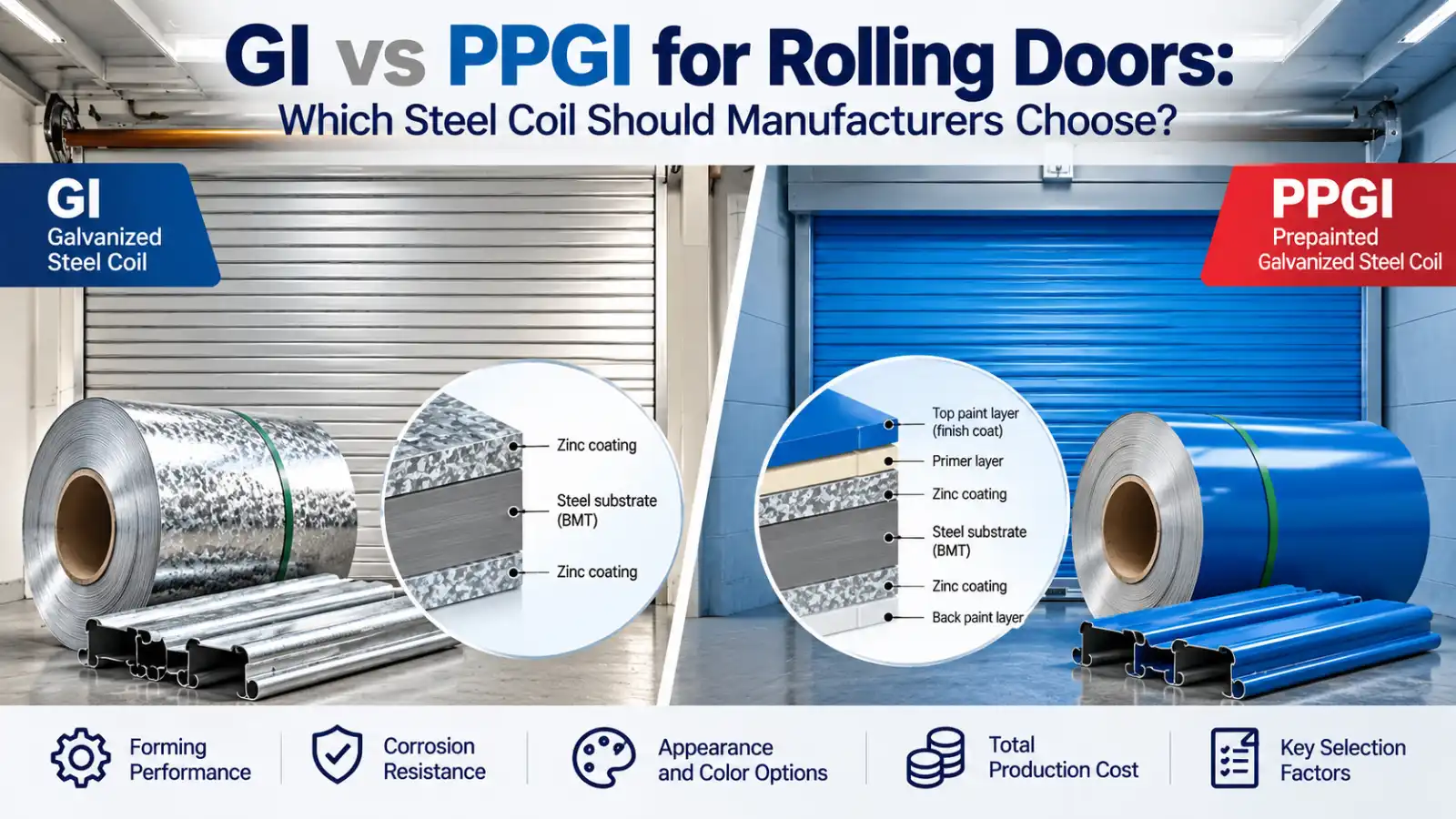
Material selection should follow finished door requirements and your factory workflow.
| Application |
Material Recommendation |
Key Checks |
| Industrial roller shutters |
GI or PPGI |
Mechanical strength, thickness, corrosion exposure |
| Coloured shopfront shutters |
PPGI preferred |
Colour consistency, coating flexibility, scratch resistance |
| Warehouse internal rolling doors |
GI or PPGI |
Profile design, strength, indoor/outdoor exposure |
| Shutters for post‑powdercoating / post‑painting |
GI preferred |
Galvanized surface compatibility with topcoat |
| Coastal / high‑salt installations |
Application‑specific coating system |
Zinc weight, paint grade, cut edge protection |
These are selection guidelines, not fixed specs. Final approval must align with structural calculations, production trials and local product standards.
9. Common Material Defects Seen in Rolling Door Factories
Many shutter production defects are blamed on steel coils, but tooling condition, machine calibration, handling and profile design are equally likely root causes.
- Slat cracking: Local bend strain exceeds material ductility. Check steel grade, elongation, thickness, bend radius and forming sequence.
- Excessive springback: Material springs back after forming. Tune roll settings and verify yield strength data.
- Paint cracking / delamination (PPGI): Caused by insufficient coating flexibility, sharp bends, poor adhesion or rough handling. Review T‑bend test certificates and run forming trials.
- Surface scratches: Triggered by worn rolls, sharp guides, poor stacking or packing. Inspect all contact tooling and packaging procedures.
- Profile distortion: Mixed factors including thickness variation, inconsistent mechanical properties and misadjusted roll stands. Run trial batches to separate material faults from machine faults.
10. Quality Checks Before Purchasing GI vs PPGI Coils
Before releasing bulk orders, define clear, measurable acceptance criteria.
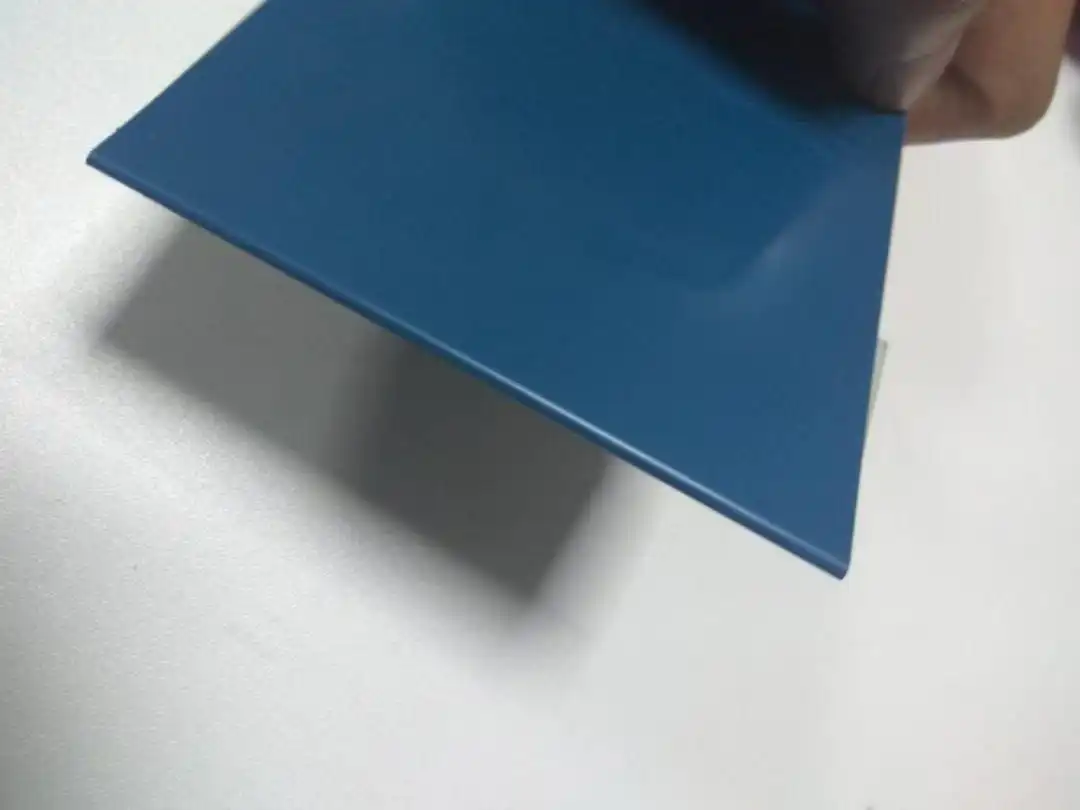
For GI, inspect substrate dimensions, mechanical properties, zinc coating and surface condition. For PPGI, add validation of the organic coating system and formability.
Recommended pre‑order checks:
- Thickness measurement, confirm BMT / TCT and tolerance
- Verify certified yield strength, tensile strength and elongation
- Confirm zinc coating class / coating mass
- PPGI extra: validate paint system, gloss, colour match and coating performance
- Run forming trial with your actual rolling door profile and production line
- Audit packaging for moisture and abrasion protection during transit
Material test certificates (MTC) are supporting documents — they cannot replace a successful shop forming trial.
11. GI vs PPGI Purchasing Checklist for Rolling Door Manufacturers
Prepare this specification sheet before requesting supplier quotes to ensure comparable offers.
| Specification Item |
Details to Confirm |
| Material Type |
GI or PPGI |
| Steel Grade |
Grade and applicable standard |
| Thickness |
BMT or TCT, tolerance |
| Width |
Coil width and tolerance |
| Mechanical Properties |
Yield strength, tensile strength, elongation |
| Zinc Coating |
Coating designation or zinc mass |
| Paint System (PPGI only) |
Primer, topcoat, backside coating |
| Colour |
RAL / colour reference, gloss, approved sample |
| Coil Parameters |
Inner diameter, maximum coil weight |
| Packaging |
Anti‑moisture, anti‑scratch protection |
| End Use |
Rolling door profile drawing & exposure environment |
Sharing your slat drawing and physical sample helps suppliers assess formability risk and provide accurate quotations.
12. Frequently Asked Questions (FAQ)
Q1. Is GI or PPGI better for rolling door manufacturing?
Neither option is universally superior. GI works well when a galvanized metallic finish is acceptable or you plan post‑forming painting. PPGI is the better fit when you need factory pre‑coloured slats to skip secondary painting. Both must meet your mechanical and dimensional requirements.
Q2. Can PPGI steel coils be roll‑formed without paint cracking?
Yes, properly specified prepainted steel can be roll formed successfully. Success depends on coating flexibility, substrate ductility, profile bend geometry and tool condition. NCCA recommends testing coating flexibility and equipment compatibility before mass production.
Q3. Is PPGI stronger than galvanized GI steel?
Not automatically. Mechanical strength comes from the steel substrate. The paint layer does not increase yield or tensile strength. Always compare steel grade and test data instead of just GI / PPGI labels.
Q4. Which steel thickness is best for rolling doors?
There is no one‑size‑fits‑all thickness. Required thickness depends on profile geometry, shutter size, wind/load requirements, steel grade and design standards. Validate your selection against finished door performance requirements.
Q5. Is galvanized GI always cheaper than PPGI?
Not when total manufacturing cost is calculated. Raw coil prices fluctuate with specs and market conditions. If GI requires painting after forming, include labour, paint and finishing overheads in your comparison. Compare full finished‑part cost rather than coil price alone.
Q6. Can PPGI be used for rolling doors in coastal areas?
PPGI can be used for seaside shutters only if its full coating system is engineered for salt spray exposure. Evaluate zinc weight, pre‑treatment, primer, topcoat performance, cut‑edge protection and maintenance needs. A generic “PPGI” label does not guarantee coastal suitability.
Q7. What should manufacturers test when switching from GI to PPGI?
Validate substrate grade, BMT, zinc coating, colour approval, paint flexibility and roll‑forming performance. A production trial on your existing line is mandatory, to confirm the paint remains intact and scratch‑free after bending.
13. Conclusion: Select Steel Coils Around Your Production Requirements
GI and PPGI are both proven materials for rolling door manufacturing, yet they solve different finishing and workflow challenges.
GI delivers a galvanized base surface for manufacturers that do not need factory colour, or who carry out post‑coating in‑house. PPGI combines galvanized steel with a cured paint finish, cutting out separate painting operations.
Your final decision should weigh steel grade, thickness, forming behaviour, coating specs, site corrosion exposure and total production cost.
For rolling shutter factories, the safest material selection is backed by clear written specifications and a verified successful forming trial.
Need GI or PPGI Steel Coils for Rolling Door Manufacturing?
Witop Material supplies galvanized and prepainted steel coils for industrial rolling door and roller shutter production.
If you are sourcing steel for your rolling door lines, send us your required thickness, width, steel grade, coating specs and slat profile details. Our technical team can review your material specification before you place your next order.
Get a free quote from WITOP Material