

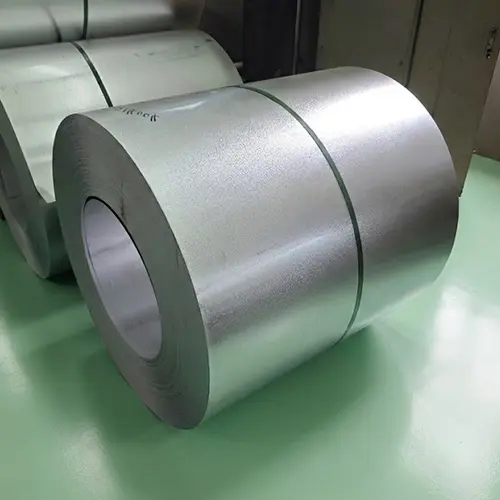
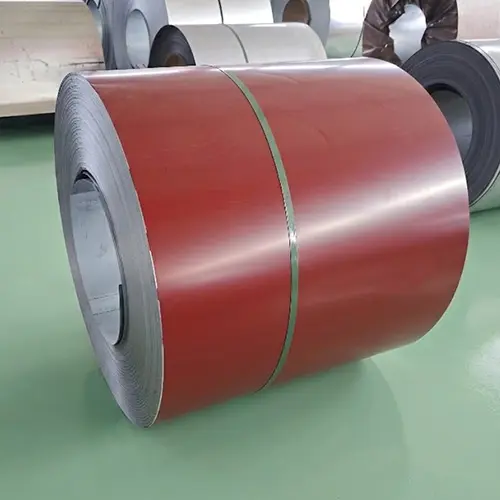


Galvalume vs. Galvanized Roofing (2026): The Smart Pick for Bulk Corrugated Orders
If you’re buying 20–50 MT+ of corrugated panels and watching every dollar, the question isn’t just “which sheet is cheaper today?”—it’s “which substrate, gauge, and coating class will deliver reliable supply, predictable QC, and the right lifecycle cost for this job?” Here’s the deal: both Galvalume (AZ) and Galvanized (G) can be the right answer, but the winner flips with your environment, finish needs, and timeline.
TL;DR verdict
- Near coast or in industrial pollution zones: Favor Galvalume (AZ50/AZ55). For color and long-term finish, use PPGL on AZ. Evidence from major producers and associations shows superior corrosion resistance and cut-edge stability in many atmospheres (always check specific warranties and exclusions).
- Inland, budget-tight, shorter service horizon: Galvanized (G60/G90) keeps upfront cost lower and performs adequately in non-aggressive environments.
- Alkaline/livestock/wet concrete contact: Choose Galvanized; avoid Galvalume in wet alkaline contact.
- Architectural longevity (painted): PPGL on Galvalume (PVDF/SMP systems) typically retains finish longer when properly specified.
Galvalume vs galvanized roofing: quick side-by-side (AZ50/AZ55 vs G60/G90)
The comparison below keeps field parity so you can weigh real trade-offs, not marketing promises.
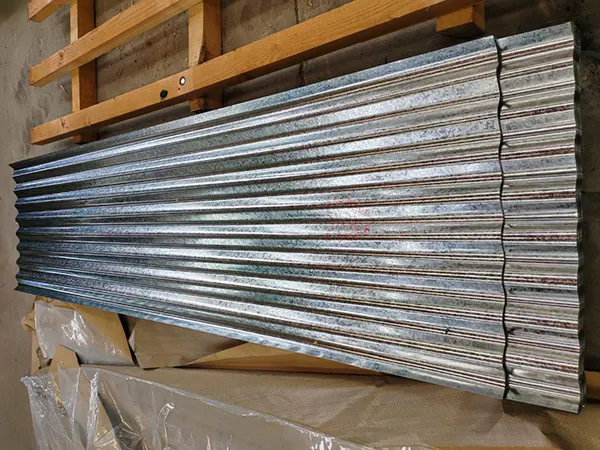

| Field | Galvalume (AZ) | Galvanized (G) |
| Best for (scenario) | Coastal/marine influence; industrial atmospheres; painted architectural longevity | Inland budget roofs; temporary/ag projects; alkaline contact areas |
| Coating class & chemistry | AZ50/AZ55; 55% Al–Zn alloy barrier + sacrificial behavior | G60/G90; pure zinc, strong sacrificial behavior |
| Relevant standard | ASTM A792/A792M; general requirements in ASTM A924/A924M | ASTM A653/A653M; general requirements in ASTM A924/A924M |
| Cut-edge performance | Generally slower edge creep; better long-term look at laps/cuts in many atmospheres | Strong sacrificial protection but edge consumption can progress faster over time |
| Paint system compatibility | Excellent base for PPGL; PVDF/SMP widely used with good adhesion (D3359) and bend (D4145) | Paintable and common in economy PE/SMP systems; premium PVDF less common for long-life specs |
| Typical thickness/gauge | 0.45–0.5 mm common for corrugated; verify profile tables | 0.45–0.5 mm common for corrugated; verify profile tables |
| Typical service life (directional) | Longer in many rural/industrial exposures; strong coastal performance (warranty limits still apply) | Adequate inland; comparatively shorter in marine/industrial exposure |
| Price tendency (2025–2026) | Usually carries a premium vs galvanized | Usually the lower upfront cost |
| Lead time & MOQ (export) | Supplier-dependent; standard 20–50 MT+ lots, 10–30 day production typical in stable markets (subject to change) | Similar bands; often broader availability in commodity gauges |
| Accessories ecosystem | Commonly matched with color-matched trims/flashings in PPGL | Ubiquitous accessories availability in GI |
| Warranty norms | Often longer substrate/perforation warranties (climate-dependent, exclusions apply) | More limited substrate warranties in some cases; verify issuer |
| Supplier QC indicators | Check MTC/COA, coating mass tolerances, ISO 9001/14001, third-party inspection options | Same QC indicators apply; request identical documentation sets |
Context and references you can use in specs and submittals:
- ASTM general requirements for metallic-coated sheet are defined in the overview of ASTM A924/A924M; coating-type specifics are in A792 (AZ) and A653 (G). See the standards overview in the publisher site in 2022–2024 editions: the overview page for A924 explains scope and relationships to coating standards according to the publisher in 2022. Link: the publisher’s overview for general requirements is described on the A924 page under “Scope.” Reference: the overview of ASTM A924/A924M general requirements.
- Industry education from the Metal Construction Association summarizes typical G and AZ classes used in roofing and how barrier vs sacrificial behavior differs; it also reflects common specification practice for A653/A792 in roofing systems. See the association’s education module: Metal Roofing A–Z (Section 2).
- Producer literature reports longer field performance for 55% Al–Zn coatings; for example, ArcelorMittal Dofasco summarizes long-term exposure findings and service-life expectations in North America: Galvalume brochure (ArcelorMittal Dofasco, 2023).
- A manufacturer narrative comparing zinc and 55% Al-Zn (marketed as ZINCALUME) discusses warranty trends and cut-edge behavior in practice: Steelscape’s Galvanized vs ZINCALUME overview.
- For painted systems, PVDF/SMP coil-coat datasheets document adhesion (ASTM D3359) and bend performance (ASTM D4145). Example: AkzoNobel TRINAR TC PVDF spec sheet.
- Common corrugated panel gauges confirmed by panel OEMs (e.g., 26/29 ga ranges) help anchor 0.45–0.5 mm decisions; see an exposed-fastener corrugated reference from a major OEM: MBCI 2-1/2″ Corrugated.
Where to view product pages while you decide substrates:
- GI corrugated panels: Galvanized Corrugated Roofing Sheets
- GL corrugated panels: Galvalume Corrugated Roofing Sheets
- Painted systems: PPGI PPGL Corrugated Roofing Sheets
How environment and gauge change the winner
Think of your substrate choice like choosing tires for a fleet: the “best” depends on terrain and mileage expectations.
- Marine and industrial atmospheres: Salt and pollutants accelerate corrosion, particularly at cut edges and fasteners. Across multiple producer and association sources, AZ coatings show stronger long-term resistance and slower edge creep than galvanized, translating to fewer early-life appearance issues and potentially longer repaint cycles. The association overview and producer brochure linked above (2023) provide context for specifying AZ50/AZ55 for these zones.
- Rural/inland atmospheres: If budgets are tight and the service horizon is modest, galvanized in G60 or G90 is a practical, widely available choice. You still need to design for drainage, minimize cut exposure, and select compatible fasteners.
- Alkaline exposure and livestock/ag contact: Wet concrete, mortar, or manure can be harsh to 55% Al–Zn. In these cases, galvanized is generally preferred and often specifically called out in warranty exclusions for Galvalume. Always cross-check warranty language for edge cases.
- Gauge and profile effects (0.45 vs 0.5 mm): Thicker base metal improves dent resistance, spans longer purlin distances, and usually raises wind uplift ratings. A 0.5 mm panel can reduce oil-canning on visible roofs and may extend repaint/re-roof intervals, which matters if labor is costly in your region. That said, exact performance depends on the corrugation profile and the OEM’s engineering tables—never skip those.
- Finish systems: If color and gloss retention matter (e.g., commercial façades), a PVDF system over AZ substrate (PPGL) tends to provide the best long-term appearance stability. SMP can be a value play with solid performance. Economy PE can fit temporary or out-of-sight structures where repaint cycles are acceptable.
Price, lead time, and QC: what actually moves your delivered cost
As of late-2025 to early-2026, coated-steel pricing is volatile and regional. Public price indices for AZ and GI are typically paywalled, so plan procurement around specifications rather than chasing a weekly spot delta. Prices vary with coil index, coating mass (AZ50 vs AZ55; G60 vs G90), gauge (0.45 vs 0.5 mm), paint system, color, volume, and Incoterms.
Pricing and warranty scope note (2025–2026): Prices are estimates and may change rapidly due to commodity markets, tariffs, freight, and capacity; confirm current quotes with suppliers in your region. Warranty durations and exclusions vary by producer and climate band; coastal bands often carry special limitations. Use the cited standards and producer docs here to frame apples-to-apples comparisons.
A practical procurement checklist you can apply today:
- Specify substrate and coating class clearly: “AZ50/AZ55 to ASTM A792/A924” or “G60/G90 to ASTM A653/A924.”
- Lock base metal thickness (BMT) and tolerance, not just nominal gauge: “0.50 mm BMT ± tolerance per ASTM A924.”
- State paint system and tests when using color: “PVDF 70% resin; adhesion per ASTM D3359; T-bend per ASTM D4145.”
- Confirm accessories and fasteners: match substrate/coating and color for gutters, flashings, ridge caps, and screws.
- Ask for QC and logistics: mill test certificates, coating mass verification, production window, export packaging, and inspection options.
Note on export packaging and transit risk: For ocean shipments, expect a seaworthy stack—waterproof interleaves, protective film, outer steel/iron wrap, edge guards, desiccants/VCI options, and palletization or crating as needed. Photodocumentation before containerization helps reduce claims.
If you need matched trims with your panels, see: Roofing Gutters (Witop).
Best-fit scenarios (choose with confidence)
- Coastal or high-corrosion projects: Choose Galvalume AZ50/AZ55; go PPGL for color longevity and tighter repaint cycles. Verify the coastal band and any warranty exclusions.
- Budget-sensitive inland roofs: Choose Galvanized G60 or G90 to reduce upfront CAPEX, especially for utility buildings where appearance aging is acceptable.
- Livestock/alkaline or wet concrete contact: Choose Galvanized and design details to minimize ponding and crevice traps.
- Painted architectural longevity: Choose PPGL on AZ substrate with PVDF; specify adhesion and bend tests (D3359/D4145) and a color standard.
- Temporary or agricultural shelters with rapid install: Choose thinner-gauge Galvanized panels for availability and lower price per ton; plan for an earlier refresh.
A simple decision path
- Are you within a defined coastal or heavy-industrial influence zone? If yes, Galvalume (AZ50/AZ55). If color is required, use PPGL on AZ.
- If inland and the project is price-sensitive with a mid-term horizon, Galvanized (G60/G90) is the value pick.
- If the roof or components will touch wet concrete/mortar or livestock manure, go with Galvanized.
FAQ (snippet-ready)
Q: Which is better for coastal roofs: Galvalume or Galvanized? A: In most coastal or industrial atmospheres, Galvalume (AZ50/AZ55) generally outperforms galvanized on corrosion resistance and cut-edge stability, per producer data and association education (see the ArcelorMittal Dofasco 2023 brochure and the MCA overview linked above). Always check warranty limits for coastal bands.
Q: What coating class do I need for a 0.5 mm corrugated roofing sheet? A: For high-exposure or long-life installs, specify AZ50/AZ55 to ASTM A792/A924; for budget inland builds, G60 or G90 to ASTM A653/A924 is common. Pair with the panel OEM’s engineering tables.
Q: Can I paint Galvalume with PVDF/SMP coatings? A: Yes. PVDF and SMP coil-coat systems are commonly specified on AZ substrates and demonstrate strong adhesion (ASTM D3359) and bend performance (ASTM D4145); see the linked PVDF datasheet for typical values.
Q: 0.45 mm vs 0.5 mm: which should I choose? A: 0.5 mm improves dent resistance and spans, and can extend repaint/re-roof intervals—useful where labor is expensive or winds are higher. 0.45 mm trims upfront cost for short spans or temporary structures. Always verify with the exact corrugation profile tables.
Q: How much more does Galvalume cost than Galvanized in 2026? A: Directionally, AZ tends to price above GI, but the spread changes with markets, gauge, coating class, and paint system. Because public indices are paywalled, obtain two to three current quotes for your exact spec and Incoterms. As of early-2026, treat any web list price without a date and spec as unreliable.
Also consider: matched systems and reliable export supply
Disclosure: Witop Material is our brand. If you need substrate flexibility (GI/GL/PPGL), matched trims, and export-ready packaging under one roof, review the product pages linked above and request identical QC documentation for either substrate to keep comparisons fair.
Make a confident, evidence-first choice: lock the standard (ASTM A792/A653 with A924), the coating class (AZ50/AZ55 or G60/G90), and the BMT (0.45/0.5 mm), then gather dated quotes. That way, “galvalume vs galvanized roofing” becomes a clear, auditable procurement decision, not a guessing game.