

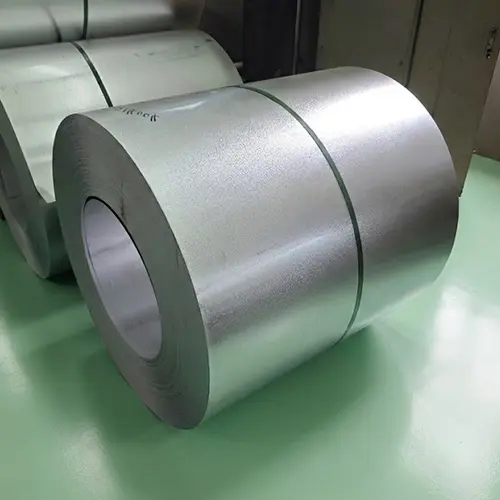
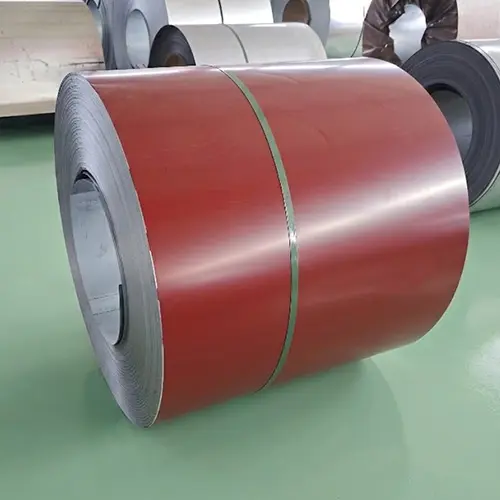


Salt air is unforgiving. So does galvanized steel rust at the coast? Yes—eventually. Zinc coatings protect steel by forming a stable patina and by sacrificial action, but chloride-rich marine air accelerates loss. In severe marine exposures, standard galvanized (GI) can show early cosmetic change and, over time, red rust where the zinc is consumed, especially in unwashed areas and at cut edges.
If your project sits within several hundred meters of breaking surf or regularly sees salt spray, you must decide whether to stay with GI (and at what coating mass) or step up to 55% aluminum–zinc (Galvalume/Al-Zn), a duplex system (zinc + paint), or even stainless/aluminum in splash/tidal zones. This guide gives you the standards, numbers, and field lessons to make that call with confidence.
The quick decision (so you can move forward)
- Marine atmosphere within a few hundred meters of surf (ISO 9223 C5/CX) or frequent salt spray: prefer Galvalume (AZ150–AZ185) on roof/wall sheet; consider duplex systems for added margin. Retain GI only at higher coating mass (e.g., G90/Z275) and with disciplined maintenance.
- Splash/tidal or standing-water/unwashed areas: GI or Galvalume alone is risky. Use duplex (HDG + paint) or stainless/aluminum depending on loads, aesthetics, and budget.
- Inland coastal (≥ 500 m to ~2 km) with good rainfall washing and low shielding: AZ150–AZ185 typically outperforms GI of equal thickness; GI G90/Z275 can be acceptable with conservative detailing and inspection.
Let’s dig in.
So, does galvanized steel rust at the coast?
Yes—here’s why it can and how to slow it. Zinc on GI forms a compact patina of zinc carbonate/hydroxy-carbonate in normal atmospheres, which slows further attack. In marine air, chlorides disturb this cycle; salt deposits plus wet–dry cycling foster porous corrosion products and pitting, especially in crevices and unwashed zones. That’s why the question “does galvanized steel rust” is less about yes/no and more about how fast the zinc is consumed.
- GI (zinc): Provides sacrificial protection at cuts/scratches and a barrier via patina. Vulnerable where salt can accumulate and stay damp.
- 55% Al-Zn (Galvalume): Adds an aluminum-rich intermetallic and oxide that behaves like a durable barrier. In marine air, this barrier slows ongoing corrosion; sacrificial behavior near cuts is reduced vs. pure zinc but still present through the zinc-rich phase.
- White rust vs. red rust: New, tightly stacked or poorly ventilated zinc surfaces can develop white rust (wet storage stain)—zinc hydroxide that looks chalky but isn’t structural. Red rust signals base steel exposure and is a failure indicator.
Standards you’ll reference (and what they mean)
- ISO 9223/9226 — Atmospheric corrosivity categories (C1–CX) are set by first-year metal loss. In coastal projects, you’ll often see C4–C5 or CX. An open summary table with zinc loss ranges appears in the Galvanizers Association of Australia/New Zealand guide, derived from ISO 9223, and is useful for mapping site classes and estimating life bands. See the zinc loss ranges in the Galvanizers Association of Australia/New Zealand’s open Guide to Durability of HDG (PDF, ISO 9223 summary): https://www.galvanizing.org.nz/docs/GAA_GANZ_Guide_to_Durability_of_HDG_1.pdf
- ASTM A653/A924 — Designations, test methods, and tolerances for galvanized sheet (GI).
- ASTM A792/A792M — Designations for 55% Al-Zn coated sheet (Galvalume/Al-Zn).
- ASTM A123/ISO 1461 — Batch hot-dip galvanizing (structural members) and minimum average coating thickness checks; ASTM A780 for repair.
- Test method caveat — Salt spray (ASTM B117) is a QC test and correlates poorly to field performance for zinc systems; the American Galvanizers Association explains why B117 should not be used to predict service life for HDG/zinccoated steels (resource page, 2024): https://galvanizeit.org/hot-dip-galvanizing/how-long-does-hdg-last/salt-spray-testing-of-hot-dip-galvanized-hdg-steel
According to the Galvanizers Association of Australia/New Zealand’s durability guide derived from ISO 9223 (open PDF above), zinc’s first-year loss rises sharply from C3 into C4–C5/CX, which aligns with coastal acceleration. For lifecycle projections of structural HDG, the American Galvanizers Association’s life estimation notes that time of wetness and chloride deposition are the dominant accelerators (overview page, updated 2023): https://galvanizeit.org/knowledgebase/article/estimating-the-life-of-hot-dip-galvanized-coatings
Coating classes and practical conversions
The labels on mill certs can be confusing. Use this reference to translate designations into approximate per-side thickness for engineering conversations. Values are approximate; always check product-specific documents.
| Coating class | Industry label | Total coating mass (both sides) | Approx. per side thickness |
| GI (zinc) | G60 ≈ Z180 | ~0.60 oz/ft² ≈ ~180 g/m² | ~42 µm/side |
| GI (zinc) | G90 ≈ Z275 | ~0.90 oz/ft² ≈ ~275 g/m² | ~64 µm/side |
| Al-Zn (55%) | AZ150 | ~150 g/m² | ~20–25 µm/side |
| Al-Zn (55%) | AZ185 | ~185 g/m² | ~25 µm/side |
Notes: Conversions summarize common industry references (GalvInfo Notes; U. S. Steel designation sheets). GI thickness varies with coating density and distribution; AZ per-side thickness depends on alloy density and line balance.
Performance in marine air (C3–C5/CX): what the numbers suggest
- ISO 9223 framework (via the open GAA/GANZ summary above): Zinc first-year loss increases with corrosivity class; C3 sits around the low single-digit µm/year band, while C4–C5/CX are materially higher. Use those bands as inputs for life-band estimates.
- Comparative GI vs. Galvalume: Long-term field racks summarized in GalvInfoNote 1.4 (International Lead Zinc Research Organization/SSAB contributors, c. 2017) show 55% Al-Zn corroding 3–8× more slowly than GI of equal thickness depending on site. At Kure Beach, NC (severe marine, 25 m), the ratio was ~3.8; at 250 m (moderate marine), ~8.2. PDF: https://www.galvinfo.com/wp-content/uploads/sites/8/2017/05/GalvInfoNote_1_4.pdf
- Structural HDG context: AGA’s life estimation charts for batch-galvanized steel (~100–125 µm zinc) show decades in temperate marine atmospheres, but much shorter durability in splash/tidal due to constant salt deposition and wet–dry cycling. Overview (updated 2023): https://galvanizeit.org/knowledgebase/article/performance-of-galvanized-steel-in-different-environments
Implication for sheet products: If you need GI for process or appearance reasons, step up to G90/Z275, design for washing/drainage, and schedule inspections. If appearance stability and slower thickness loss are priorities, AZ150–AZ185 is typically the better choice in marine air.
Galvanized vs. Galvalume at the coast: how to choose
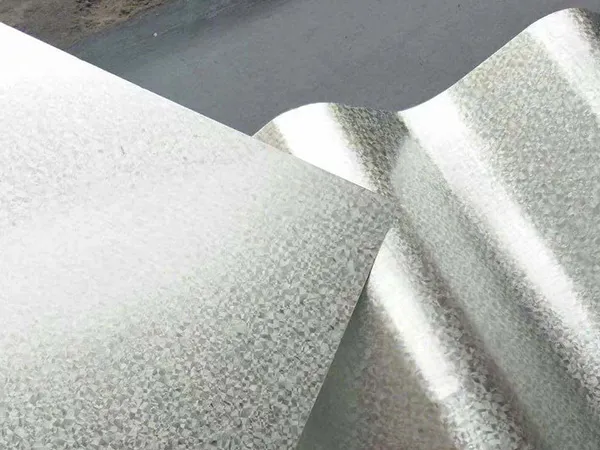
Choose Galvalume (AZ150–AZ185) when:
- The site is within several hundred meters of breaking surf or routinely receives salt-laden wind, and you can respect manufacturer coastal policies and “unwashed area” cautions.
- You want slower ongoing thickness loss and better resistance to cosmetic staining in washed zones.
Retain Galvanized (GI) when:
- You must match legacy GI components, or require stronger sacrificial behavior at edges/cuts.
- You can increase coating mass to G90/Z275 (or more) and ensure detailing that promotes rain washing and avoids debris traps.
Use duplex systems or alternative materials when:
- Exposure includes splash/tidal zones, standing water, or sheltered/unwashed areas you cannot redesign away.
- Warranty or owner expectations demand longer repaint cycles and stable appearance over decades.
Decision flow: from site to spec
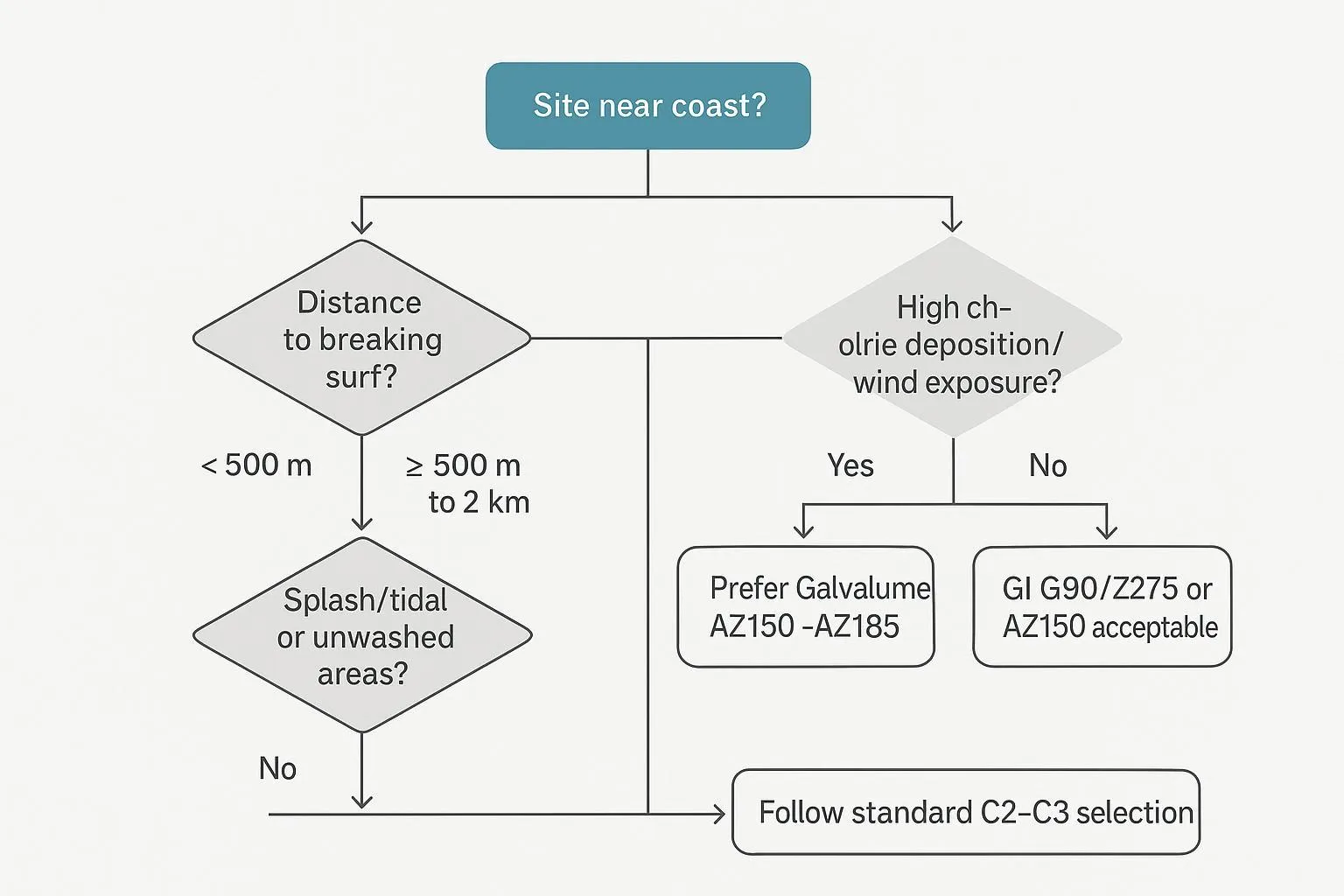
Think of it this way: classify the microclimate (distance to surf, wind, washing), select the coating family (GI vs. AZ), then set the coating mass and maintenance plan.
Compatibility and fasteners in marine projects (avoid galvanic surprises)
Runoff and mixed metals can undo a good coating choice. Pair substrates and fasteners conservatively, and isolate where needed. Guidance here reflects metal-construction association documents and galvanizing organizations; for detailed fastener advice see the Metal Construction Association’s technical brief on fastener compatibility (2018): https://www.metalconstruction.org/view/download.php/online-education/education-materials/other-educational-files/fastener-compatibility-with-profiled-metal-roof-and-wall-panels
| Situation | Recommended pairing | Avoid | Isolation methods |
| GI or AZ sheet, coastal | 300-series stainless fasteners (304 inland; 316 near surf) with neoprene washers | Copper/brass fasteners or runoff above GI/AZ; bare carbon steel fasteners | Non-conductive gaskets, sealants, compatible washers |
| Contact with preservative-treated lumber (e.g., ACQ) | Stainless or heavy HDG fasteners; barrier between panel and wood | Direct GI/AZ contact to wet, treated wood | Membranes, sealants, sleeves |
| Mixed metals on roofs/walls | Keep water flowing from GI/AZ to stainless/aluminum, not from copper to GI/AZ | Copper roofs/gutters draining onto GI/AZ | Flashing details, drip edges, isolation tapes |
| Concrete or masonry contact | Seal edges; use compatible primers/sealants at embeds | Raw cut edges in constantly damp concrete | Sealants, edge protection, sleeves |
Also see the American Galvanizers Association’s guidance on dissimilar metals and runoff (resource page, accessed 2024): https://galvanizeit.org/hot-dip-galvanizing/how-long-does-hdg-last/in-contact-with-other-metals
Duplex systems and lifecycle cost
Painting over zinc or Al-Zn combines barrier and sacrificial protection. Field and association guidance suggest duplex can extend maintenance intervals by roughly 1.5–2.3× vs. the metallic coating alone, provided surface prep, compatible primers, and detailing are correct. Specify surface conditioning compatible with GI/AZ, detail to eliminate traps, and document touch-up/repair under ASTM A780 for GI exposures at cuts or welds.
Lifecycle view: Duplex adds upfront cost but can reduce total repaint frequency and delay substrate repairs in marine air—particularly valuable in unwashed areas or complex geometries.
Installation, packaging, and handling: stop problems before they start
White rust (wet storage stain) is common when bundles stay damp without airflow. Prevention is straightforward: ventilate, keep bundles dry, elevate from ground, slope for drainage, use dry untreated spacers, and dry the product before packing. Light white rust usually weathers off; heavy staining needs cleaning. See the American Galvanizers Association’s notes on prevention and cleaning (knowledgebase articles, updated 2023–2024): https://galvanizeit.org/knowledgebase/article/wet-storage-stain and https://galvanizeit.org/knowledgebase/article/cleaning-galvanized-steel
Disclosure: Witop Material is our product. In export scenarios with long sea transit, we’ve found value in codifying simple SOPs—dry-in before packing, desiccants where humidity risk is high, breathable wraps, and immediate warehouse ventilation on arrival—to reduce wet storage stain incidents in coastal deliveries. Use comparable practices with any supplier you choose.
Maintenance and inspection playbook (coastal)
Set expectations with owners and crews up front.
| Interval | What to do | Focus areas | | — | — | — | — | | 6–12 months after install | Baseline inspection, light wash if needed | Cut edges, fasteners, overlaps, sheltered zones | | Annually (coastal C4–C5) | Rinse/clean salt and debris; inspect sealants/fasteners | Under HVAC units, behind trims, gutters, parapets | | Every 3–5 years | Spot repair coatings; renew sealants; tighten/replace compromised fasteners | Unwashed/sheltered areas first | | After severe storms | Inspect for coating damage, salt crusting, trapped debris | Windward facades/roofs, flashings |
Document findings with photos; action small defects promptly to prevent underfilm corrosion.
Case lessons from the field (three short scenarios)
- Near-shore roof, 300 m from surf (high wind, frequent rain wash): Uncoated Galvalume AZ185 panels with 316 stainless fasteners performed with minimal staining over 8–10 years in service; unwashed zones under rooftop units showed localized dulling—scheduled cleaning resolved it.
- Inland coastal roof, ~1.5 km from surf (good wash, moderate deposition): GI G90/Z275 roof with stainless fasteners and sealed laps showed stable performance over a decade with annual rinsing; touch-up at cut edges during year 5 prevented creep rust.
- Pier-side structural steel (splash/tidal): Batch-galvanized to ASTM A123 then painted as a duplex system outlasted previous bare HDG sections; inspection intervals extended, and touch-up under ASTM A780 kept underfilm rust at bay.
These outcomes mirror the general pattern seen in association guidance: splash/tidal demands duplex or alternate alloys; inland marine favors AZ for sheet; GI can succeed where wash is reliable and edges are protected.
A critical test method note you can share with stakeholders
When someone asks to “prove it in salt spray,” explain that ASTM B117 accelerates attack uniformly with continuous wetness and chloride, which doesn’t replicate natural wet–dry cycles and patina formation. The American Galvanizers Association explains the poor correlation for zinc and HDG and why B117 is QC-oriented, not service-life predictive (resource page, 2024): https://galvanizeit.org/hot-dip-galvanizing/how-long-does-hdg-last/salt-spray-testing-of-hot-dip-galvanized-hdg-steel
Pulling it together: your spec checklist
- Classify the site per ISO 9223 indicators (distance to surf, chloride deposition, time of wetness).
- Choose the coating family: AZ150–AZ185 for most coastal sheet; GI only with higher mass and careful detailing; duplex or stainless/aluminum in splash/tidal or unwashed areas.
- Set coating class: GI at G90/Z275 minimum for marine; AZ150 as baseline, AZ185 for near-shore.
- Specify fasteners and isolation: stainless with neoprene washers; avoid copper runoff; isolate treated wood and concrete contacts.
- Detail for washing and drainage: eliminate traps; slope surfaces; seal laps appropriately.
- Define maintenance: annual cleaning/inspection; 3–5 year spot-repair cadence; post-storm checks.
- Document repair methods: reference ASTM A780 for GI repairs; follow manufacturer systems for AZ/paint touch-ups.