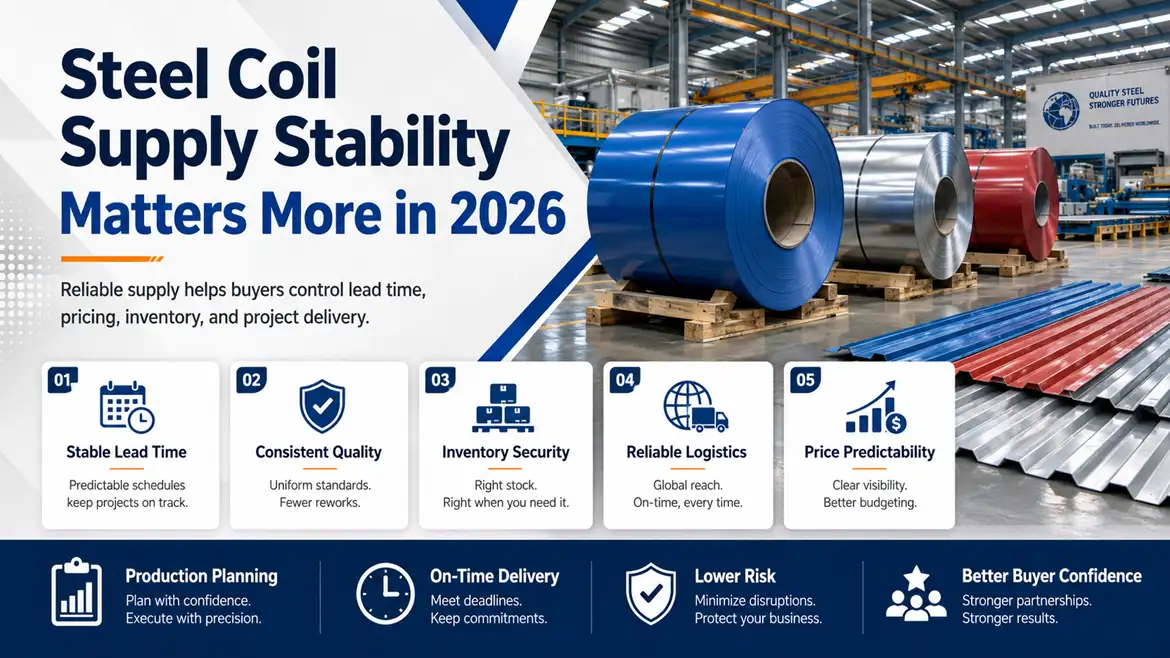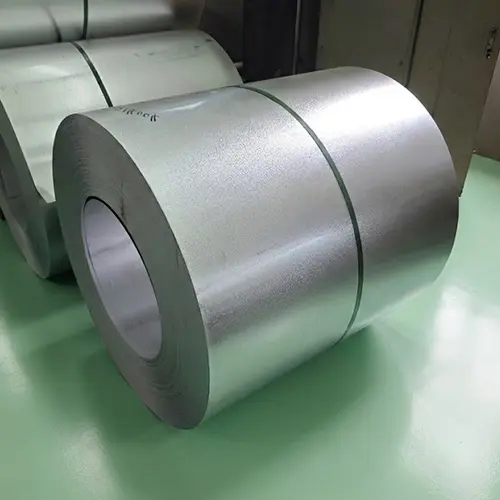
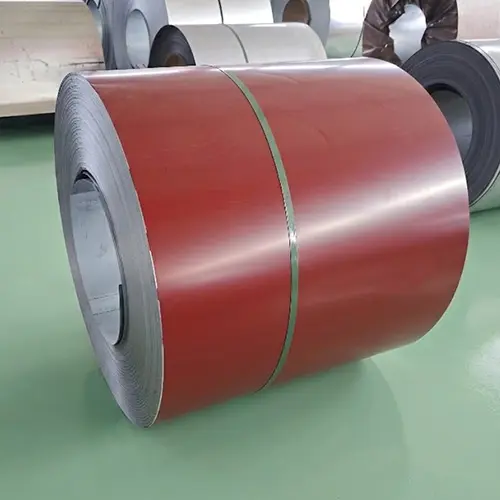


Imagine a manufacturer halting production because a shipment of steel coils arrives late or damaged by moisture. This scenario leads to lost revenue, missed deadlines, and dissatisfied customers. Steel Coil Supply stability now determines whether companies can forecast costs, avoid downtime, and maintain a competitive edge. Quality depends on how well coils resist humidity and temperature swings. Companies benefit from integrated supply solutions, as shown below:
| Performance Metric | Description |
|---|---|
| Reduced transportation and handling costs | Eliminating redundant freight moves by integrating cutting, slitting, or blanking with raw coil supply reduces costs and time. |
| Shorter lead times | In-house processing or close partnerships shorten lead times, supporting just-in-time delivery and maintaining production schedules. |
| Better quality | Improved quality is achieved through closer integration of services, reducing risks associated with multiple vendors. |
Key Takeaways
- Stable steel coil supply helps companies avoid costly production delays and keep projects on schedule.
- Proper storage with moisture and temperature control protects steel coils from rust and quality loss.
- Strong supplier relationships and diversifying sources reduce risks from supply disruptions and price swings.
- Long-term contracts provide cost savings, supply predictability, and stronger partnerships with suppliers.
- Technology like IoT and data analytics improves supply chain visibility and helps prevent delays.
- Galvanized steel coils resist corrosion better, last longer, and lower maintenance costs.
- Market changes and geopolitical risks require companies to plan ahead and adapt sourcing strategies.
- Investing in supply stability and quality control builds customer trust and strengthens market position.
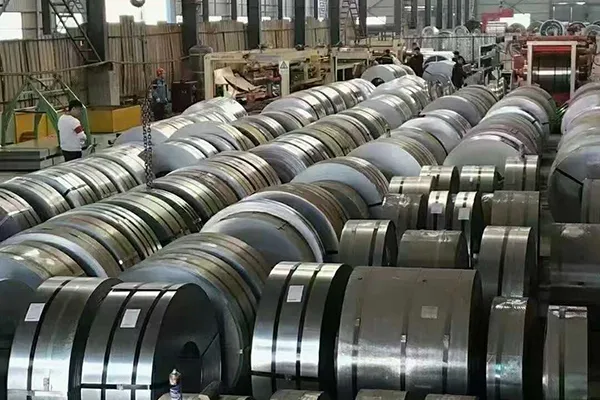
Steel Coil Supply Stability in 2026
Market Trends
Demand Shifts
Steel Coil Supply faces new challenges as global demand patterns evolve. The automotive and construction industries drive growth, especially in emerging markets. The global steel coil market is projected to reach USD 200 billion by 2026, with annual growth rates between 4% and 6%. Urbanization and infrastructure projects in Asia-Pacific and Latin America contribute to this expansion. In contrast, the European Union sees demand stabilizing after three years of decline, but consumption remains below pre-pandemic levels. North America maintains steady demand, supported by favorable government policies and robust manufacturing sectors.
| Region | Key Drivers and Trends |
|---|---|
| North America | Automotive, construction, and manufacturing sectors; favorable government policies. |
| Europe | Mature economies; Germany leads with automotive and machinery sectors. |
| Asia-Pacific | Dynamic market; China dominates production and consumption, driven by industrialization and construction. |
| Latin America | Brazil leads with agricultural and mining sectors; Mexico increases production capabilities. |
| Middle East & Africa | Emerging markets like Turkey and Saudi Arabia focus on construction; political stability remains a challenge. |
Economic downturns reduce demand in key sectors, causing production slowdowns and supply uncertainties. Price volatility arises from fluctuating demand, creating uncertainty for producers and contractors. Logistical challenges increase as infrastructure investment slows, leading to project delays. Credit constraints limit financing for supply chain participants, impacting production capacity. Sustainability goals and technological advancements push manufacturers toward greener steel production and improved supply chain resilience.
- Global infrastructure capital expenditure drives demand for hot rolled steel coils.
- Technological advancements in the automotive sector increase the need for specialized steel grades.
- Pricing volatility of key inputs like iron ore and coking coal poses challenges for producers.
- Regulatory pressures regarding carbon emissions impact production costs and expansion plans.
Supply Chain Disruptions
Steel Coil Supply stability depends on the ability to manage disruptions. Rising oil and energy costs increase manufacturing and transportation expenses, leading to higher prices for steel coil. Contractors face tighter supply windows and unpredictable pricing, making project bidding more difficult. Material price volatility stands out as a top challenge for contractors in 2026.
Resource protectionism, such as Indonesia’s planned reduction in nickel ore mining, drives up raw material costs for stainless steel production. Geopolitical disruptions, including recent drone attacks in Russia, highlight the need for geographic diversification in supply chains. These factors create uncertainty and force companies to adapt quickly.
Note: Geographic diversification and strong supplier relationships help mitigate risks from supply chain disruptions.
Quality Concerns
Moisture and Humidity Effects
Steel coils are highly sensitive to moisture and humidity during storage and transport. Corrosion rates increase significantly in tropical climates with high humidity and temperature. Prolonged exposure to moisture in outdoor storage accelerates deterioration. High humidity environments cause aggressive rusting, including corrosion beneath the mill scale when moisture becomes trapped. Metallurgical factors, such as mill scale, can both protect and promote corrosion, depending on storage conditions.
- Steel coil corrosion during transit is influenced by mill scale and environmental factors.
- Storage in humid climates increases corrosion rates.
- Outdoor storage leads to accelerated deterioration.
- High humidity causes rusting beneath mill scale.
Proper storage practices, including moisture control and climate management, are essential to maintain steel coil quality and prevent costly material degradation.
Temperature Impact
Temperature fluctuations during hot rolling and cooling processes affect the mechanical properties of steel coils. The heating phase, where slabs are reheated to over 2000°F, enhances malleability for effective rolling. Controlled cooling determines the final grain structure and mechanical properties, such as ductility and tensile strength. Careful management of temperature ensures minimal internal stresses, reducing the likelihood of warping during fabrication. Temperature swings during storage can also impact steel coil quality, making temperature management a critical factor in supply stability.
Tip: Companies should monitor temperature and humidity levels in storage facilities to protect steel coil quality and reduce risks of degradation.
Consequences of Instability
Production Delays
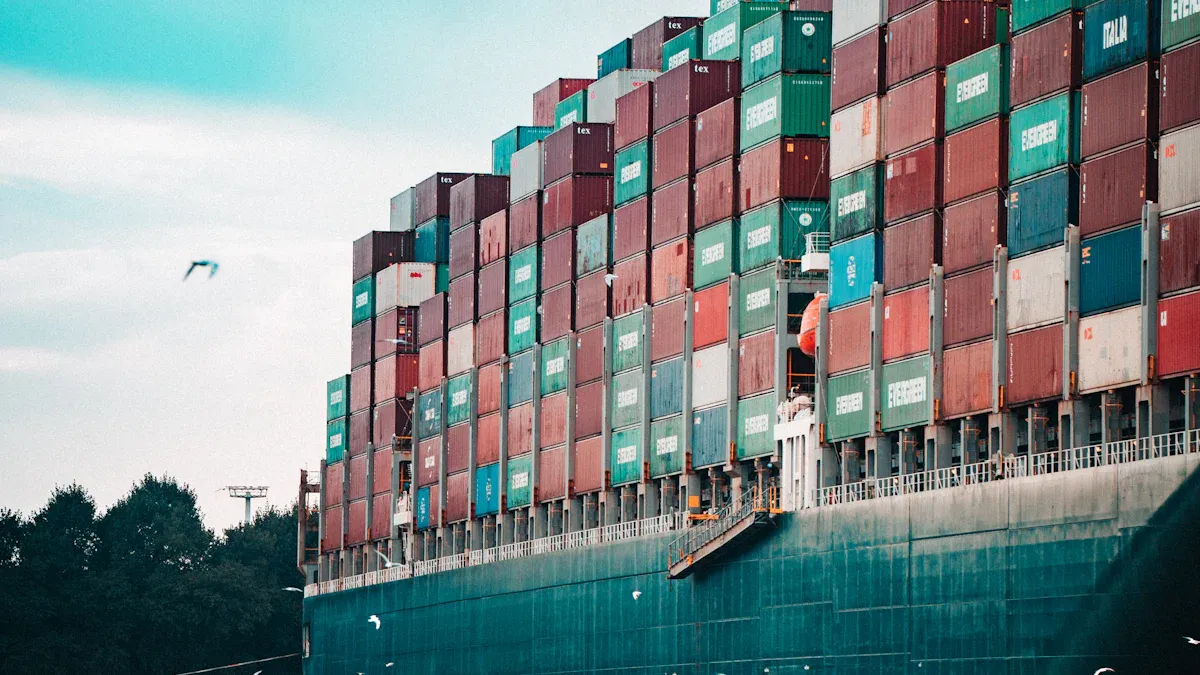
Unstable Steel Coil Supply often leads to production delays. Manufacturers depend on timely deliveries to keep assembly lines running. When shipments arrive late or in poor condition, workers stand idle and machines stop. These interruptions can cascade through the entire operation. Missed deadlines force companies to reschedule projects and pay overtime to catch up. In some cases, they must source emergency materials at higher prices, which increases costs and disrupts planning.
Production delays also affect downstream partners. Contractors and fabricators may wait for critical components, which slows construction or product launches. This domino effect can damage relationships with suppliers and customers. Companies that experience frequent delays risk losing contracts to more reliable competitors.
Note: Consistent supply chains help manufacturers avoid costly downtime and maintain steady output.
Cost Uncertainty
Cost uncertainty becomes a major challenge when Steel Coil Supply is unstable. Manufacturers face fluctuating steel prices, which squeeze profit margins. Rising input costs often outpace sales prices, shrinking gross margins. This situation becomes even more difficult for companies locked into long-term contracts without price adjustment clauses. They cannot pass on higher costs to customers, which reduces profitability.
Sudden spikes in raw material prices tie up working capital in inventory. Companies must spend more on steel coils, leaving less cash for payroll, maintenance, or new investments. This lack of liquidity complicates financial planning and can slow business growth.
Recent market events highlight the risks. Hot-rolled steel coil futures surged to a one-year high of $939.05 per ton, a 30% increase year-to-date. Tariffs have intensified competition for limited supplies, driving up prices and creating uncertainty. Buyers struggle to predict future costs, which stalls investment decisions. In June 2025, U.S. steel futures rose nearly 14%, and hot-rolled coil prices jumped about 12% in a short period. Experts estimate that increased tariffs will raise costs for U.S. importers by over $50 billion annually. These unpredictable changes make it hard for manufacturers to manage costs and maintain stable pricing.
Customer Impact
Instability in Steel Coil Supply directly affects customers. Delays and cost overruns often lead to missed delivery dates and reduced product quality. Customers may receive goods that do not meet specifications due to rushed production or compromised materials. This situation erodes trust and damages long-term relationships.
Unreliable supply chains force customers to seek alternative suppliers. They may switch to competitors who offer more consistent service and better quality. Companies that cannot guarantee on-time delivery or product reliability risk losing market share. In industries like automotive and construction, even small delays can halt entire projects, causing significant financial losses for all parties involved.
Tip: Reliable supply chains build customer loyalty and support repeat business.
Competitive Risks
Unstable Steel Coil Supply creates significant competitive risks for manufacturers and fabricators. Companies that cannot secure reliable materials often lose their edge in the market. When supply chains break down, competitors with stronger supplier relationships or better inventory management step in to fill the gap. These companies win new contracts and build stronger reputations for reliability.
Market volatility increases the pressure on businesses. Economic downturns reduce investment in construction and manufacturing. This leads to declining demand in key sectors. Companies face shrinking order books and must compete for fewer projects. Volatility in steel prices also squeezes profit margins. When prices drop during downturns, excess supply and reduced demand make it difficult for companies to cover costs. Some businesses may lower prices to win contracts, but this strategy often leads to unsustainable margins.
Supply chain disruptions cause production cuts by steel mills. These cuts result in longer lead times and inventory shortages. Companies that cannot deliver on time risk losing customers to more agile competitors. Delays in receiving steel coils force manufacturers to adjust schedules, which can disrupt entire production lines. Customers may turn to alternative suppliers who can guarantee timely delivery and consistent quality.
Financial pressures mount as lower sales and tighter margins create cash flow challenges. Companies may delay capital investments or cut back on research and development. This limits their ability to innovate and respond to changing market demands. Firms that cannot invest in new technologies or improve processes fall behind competitors who can.
Material degradation adds another layer of risk. Steel coils exposed to moisture or temperature swings may develop rust or lose mechanical strength. Quality loss can lead to rejected shipments, warranty claims, and damaged customer relationships. Competitors who maintain strict quality controls and proper storage practices gain a reputation for delivering superior products.
Tip: Companies that prioritize supply stability and quality control position themselves as reliable partners. They attract repeat business and strengthen their market position.
Drivers of Stability
Price Volatility
Price volatility remains a primary concern for companies managing Steel Coil Supply. Fluctuations in steel prices can disrupt budgets and complicate procurement planning. Several factors drive these price swings:
- Supply chain disruptions, such as transportation delays or natural disasters, often cause sudden changes in pricing.
- Raw material price fluctuations, especially for iron ore and coke, directly impact procurement costs.
- Geopolitical tensions, including trade policies and international conflicts, can unsettle the steel market.
- Demand shifts in sectors like construction and automotive influence steel coil pricing.
To address these challenges, industry leaders use several strategies:
- Implement flexible procurement strategies, combining spot market purchases with long-term contracts.
- Optimize supplier relationships to secure better terms and enhance reliability.
- Leverage data and market intelligence to anticipate trends and make informed decisions.
- Implement cost control measures, such as regular audits and strict budget management.
These approaches help companies maintain consistent supply and control costs, even in volatile markets. Reliable Steel Coil Supply supports stable production and long-term planning.
Geopolitical Risks
Geopolitical risks have a direct impact on steel coil availability and pricing. Trade disputes and sanctions can quickly alter global supply chains. For example, the U.S.-China trade war led to higher steel prices in the United States and reduced exports from China. This shift affected global markets and forced buyers to adjust sourcing strategies. Sanctions on Russia also reduced steel exports, pushing countries to seek alternative suppliers and driving up prices worldwide.
Companies that monitor geopolitical developments and diversify their supplier base can better manage these risks. Geographic diversification and strong supplier relationships provide a buffer against sudden market changes. Proactive risk management ensures that production continues without major disruptions.
Tip: Regularly review supplier contracts and maintain open communication to respond quickly to geopolitical events.
Regulatory Changes
Regulatory changes will shape the steel coil market in 2026. Governments plan to reinstate formal export licensing systems for steel products. These systems require detailed documentation, including export contracts and product quality inspection certificates. The goal is to enhance product quality and standardize export processes.
New regulations will cover about 300 customs commodity codes, including both raw materials and finished steel products. This expanded oversight will strengthen monitoring and guide high-quality exports. Companies may experience longer lead times and higher prices for certain products as a result.
Manufacturers must stay informed about regulatory updates to avoid delays and compliance issues. Adapting quickly to new standards ensures continued access to high-quality, durable, and corrosion-resistant steel coils.
Technology Advances
Technology plays a critical role in strengthening Steel Coil Supply stability. Companies now invest in digital transformation to enhance quality control and monitoring. These improvements help ensure that steel coils meet industry standards. As a result, manufacturers see fewer defects and higher customer satisfaction.
Automation stands out as a key driver of efficiency. Automated systems streamline order management and logistics. This reduces human error and speeds up delivery times. Many companies use advanced supply chain management systems. These platforms provide real-time visibility into inventory and supplier performance. Managers can track shipments, monitor stock levels, and respond quickly to disruptions.
Note: Real-time data helps companies make faster decisions and avoid costly delays.
Several cutting-edge technologies shape the future of steel coil supply chains:
- Internet of Things (IoT) devices monitor machinery performance and inventory levels. Sensors collect data on temperature, humidity, and equipment status. This information allows teams to detect issues early and maintain optimal storage conditions.
- Big Data and Analytics tools analyze large volumes of information. Companies use these insights to forecast demand, optimize production schedules, and identify trends. Better forecasting reduces the risk of overstocking or running out of materials.
- Artificial Intelligence (AI) optimizes production processes and improves quality control. AI systems can detect defects in steel coils during manufacturing. They also help predict maintenance needs, reducing downtime and extending equipment life.
Digital transformation also supports sustainability goals. Automated systems track energy use and emissions. This helps companies comply with environmental regulations and reduce their carbon footprint. Technology-driven supply chains adapt more easily to regulatory changes and market shifts.
- Investing in technology and automation increases supply chain resilience.
- Supply chain management systems improve transparency and responsiveness.
- Automation reduces manual errors and supports consistent product quality.
Companies that embrace these advances gain a competitive edge. They deliver high-quality, durable, and corrosion-resistant steel coils on time. Customers benefit from reliable service and consistent product standards. As technology continues to evolve, manufacturers must stay agile and invest in new solutions to secure their supply chains.
Securing Steel Coil Supply
Supplier Relationships
Strong supplier relationships form the foundation of a stable steel coil supply chain. Companies that invest in building trust with suppliers gain access to reliable materials, consistent quality, and timely deliveries. These partnerships help manufacturers avoid production stoppages and financial losses. Reliable suppliers protect against disruptions that can cost companies up to 45% of annual revenue over a decade. Over 80% of cyber incidents trace back to unreliable suppliers, highlighting the importance of careful selection and ongoing collaboration.
A robust supplier network supports procurement strategies and enhances a company’s reputation in the marketplace. Timely deliveries from trusted partners prevent costly delays and maintain customer satisfaction. Inadequate supplier selection often leads to low-quality products and missed deadlines, damaging a company’s image. Manufacturers who prioritize supplier relationships secure a competitive advantage and ensure long-term business success.
Tip: Regular communication and performance reviews with suppliers help maintain high standards and address issues before they escalate.
Diversification
Diversification reduces the risks associated with relying on a single supplier or region. Companies that source steel coils from multiple suppliers gain flexibility and increase their negotiation power. This approach protects against supply interruptions caused by trade disputes, tariffs, or geopolitical events.
Supplier diversification mitigates the risks associated with relying on a single supplier, which is particularly critical in the current trade environment where tariffs can disrupt supply chains. By identifying and qualifying alternative suppliers, companies can reduce their vulnerability to supply interruptions.
Manufacturers who diversify their supply base can adapt quickly to market changes. They avoid price surges and shortages that affect competitors with limited sourcing options. Diversification also encourages suppliers to compete on quality and service, driving continuous improvement across the supply chain.
Long-Term Contracts
Long-term contracts provide stability and predictability in steel coil procurement. These agreements lock in prices, secure supply, and foster collaboration between buyers and suppliers. Companies benefit from cost savings through bulk purchasing and volume commitments. Long-term contracts also strengthen relationships, encouraging suppliers to tailor material specifications and delivery schedules to meet customer needs.
The following table outlines the main benefits of long-term contracts:
| Benefit | Description | Example |
|---|---|---|
| Cost Savings | Long-term contracts can lead to cost reductions through bulk purchasing. | A steel manufacturer may secure lower per-unit costs due to volume commitments. |
| Strengthened Relationships | Fosters trust and collaboration with suppliers. | A service center could collaborate with a supplier to optimize material specifications. |
| Stability and Predictability | Provides operational stability and predictable costs. | A distributor can avoid price volatility and maintain consistent stock levels. |
| Risk Mitigation | Helps mitigate risks related to supply chain disruptions. | A construction firm can avoid project delays even during market shortages. |
Manufacturers who use long-term contracts can plan production schedules with confidence. They avoid sudden price increases and ensure steady access to high-quality steel coils. These agreements support business growth and help companies maintain a strong position in a volatile market.
Storage Practices
Proper storage practices play a critical role in maintaining the quality and reliability of steel coils. Companies that invest in effective storage solutions protect their inventory from environmental damage and ensure consistent supply for their operations. The following sections outline essential strategies for handling, moisture control, and temperature management.
Handling and Moisture Control
Steel coils remain highly vulnerable to moisture, which can lead to corrosion, rust, and significant quality loss. Companies must adopt strict handling and moisture control measures to safeguard their materials.
- Store coils in cool, dry environments with stable temperatures. This approach prevents moisture accumulation and reduces the risk of corrosion.
- Ensure adequate airflow and ventilation in storage areas. Good ventilation allows any moisture to evaporate quickly, minimizing the chance of damage.
- Remove protective PVC films before exposing coils to UV light or extreme heat. This step prevents adhesive residue and surface damage.
- Stack coils properly using sturdy skids. Proper stacking avoids physical damage and keeps coils stable during storage.
- Use vibration-damping cradles or rubber pads during handling and transport. These tools reduce the risk of dents and scratches.
- Always keep coils away from high-traffic areas to prevent accidental impacts.
- If coils become wet, dry them within 72 hours to stop corrosion from developing.
- Regularly inspect skids and replace any that show signs of wear or damage.
Tip: Consistent inspection and prompt action help prevent minor issues from turning into costly problems.
Temperature Management
Temperature fluctuations can affect the mechanical properties and surface quality of steel coils. Companies must control storage temperatures to maintain product integrity and support a stable Steel Coil Supply.
- Maintain storage areas at stable, moderate temperatures. Sudden changes in temperature can cause condensation, which increases the risk of rust.
- Avoid placing coils near heat sources or in direct sunlight. Excessive heat can alter the coil’s structure and lead to surface defects.
- Use temperature monitoring devices to track conditions in real time. These devices alert staff to any changes that could threaten coil quality.
- Implement climate control systems in warehouses, especially in regions with extreme weather. Climate control helps maintain optimal storage conditions year-round.
Note: Proactive temperature management ensures that steel coils retain their strength and appearance, reducing the risk of quality complaints and production delays.
Companies that follow these storage practices protect their investment and support a reliable Steel Coil Supply. Proper handling, moisture control, and temperature management not only preserve material quality but also enhance operational efficiency and customer satisfaction.
Galvanized Steel Coil Benefits
Corrosion Resistance
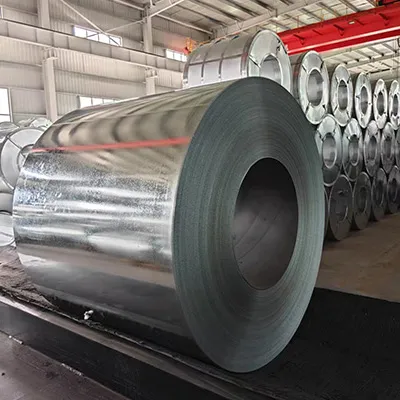
Galvanized steel coils deliver superior protection against corrosion. Manufacturers apply a zinc coating to the steel, which acts as a barrier against moisture and chemicals. This process extends the lifespan of steel coils, especially in harsh environments. The zinc layer provides sacrificial protection, so even if the surface gets scratched, the underlying steel remains shielded. Construction teams and fabricators prefer galvanized steel for projects exposed to weather or chemicals.
| Feature | Galvanized Steel Coils | Non-Galvanized Alternatives |
|---|---|---|
| Corrosion Resistance | High due to zinc coating | Lower, prone to rust and degradation |
| Sacrificial Protection | Yes, protects scratched areas | No, entire surface can corrode |
| Lifespan in Harsh Conditions | Extended due to protective properties | Reduced lifespan in moisture or chemicals |
- Galvanized steel coils resist rust and degradation.
- The zinc coating preserves coil integrity, even after minor surface damage.
- These coils perform well in outdoor construction and environments with high moisture.
Tip: Galvanized steel coils help companies reduce maintenance costs and avoid premature material failure.
Project Reliability
Galvanized steel coils improve reliability in construction and manufacturing. Their durability ensures consistent performance over time. Teams use these coils for buildings, fences, roofs, and staircases because the material maintains structural integrity. The corrosion resistance reduces the need for frequent repairs, which keeps projects on schedule. Galvanized steel also offers a shiny finish, adding value to modern architectural designs.
- Galvanized steel coils support long-lasting performance.
- The material’s versatility fits many applications.
- Reduced maintenance needs keep projects running smoothly.
- The environmentally friendly application process aligns with sustainability goals.
Note: Reliable materials contribute to stable Steel Coil Supply and help companies meet deadlines.
Cost Effectiveness
Galvanized steel coils offer cost advantages for manufacturers and contractors. The extended lifespan lowers replacement costs. Companies spend less on repairs and maintenance because the zinc coating protects against rust. Bulk purchasing of galvanized coils through long-term contracts can further reduce expenses. The material’s durability means fewer disruptions and less downtime, which supports efficient operations.
- Lower maintenance and repair costs save money.
- Fewer replacements reduce overall project expenses.
- Bulk procurement strategies maximize cost savings.
- Durable coils minimize production delays and warranty claims.
Companies that choose galvanized steel coils gain a competitive edge by delivering reliable, cost-effective solutions to their customers.
Future Outlook
Market Changes
The steel industry expects significant shifts in the years following 2026. Demand for advanced steel grades will rise as manufacturers seek materials with higher strength and better corrosion resistance. Many companies will invest in automation and digital supply chain management to improve efficiency. These investments will help them respond quickly to changing market conditions.
Sustainability will become a central focus. Governments and industry leaders will set stricter standards for carbon emissions. Producers must adopt greener technologies to meet these requirements. Companies that invest early in decarbonization will gain a competitive advantage. They will also attract customers who value environmentally responsible practices.
Global trade patterns may shift as countries adjust their policies. Some regions will increase domestic production to reduce reliance on imports. Others will form new trade alliances to secure access to raw materials. These changes will affect pricing, availability, and the flow of steel products worldwide.
Note: Companies that monitor market trends and invest in technology will adapt more easily to future challenges.
Emerging Risks
Several risks could threaten supply stability in the next decade. Companies must prepare for these challenges to protect their operations and customers.
- Extreme volatility in the pricing of critical raw materials like iron ore and coking coal may put pressure on profit margins. Sudden price swings can disrupt budgets and make long-term planning difficult.
- Escalating global regulatory pressures regarding carbon emissions will require costly investments in new technologies. Companies that delay these upgrades may face fines or lose access to key markets.
- Geopolitical tensions and trade disputes, especially between major players such as China and the United States, can cause supply disruptions and price surges. These events may force companies to find new suppliers or adjust their sourcing strategies quickly.
Natural disasters and climate change also pose risks. Floods, storms, and extreme temperatures can damage infrastructure and delay shipments. Cybersecurity threats may increase as companies rely more on digital systems. A single cyberattack could disrupt production or compromise sensitive data.
To address these risks, companies should develop flexible procurement strategies and diversify their supplier base. Investing in advanced storage and monitoring systems will help maintain product quality during unexpected events. Regular risk assessments and scenario planning will support a resilient Steel Coil Supply.
Tip: Proactive planning and investment in technology will help companies navigate future uncertainties and maintain a stable supply chain.
Steel Coil Supply stability remains essential for business success in 2026. Companies face rising prices, project delays, and market volatility. Industry experts highlight several priorities:
- Secure stable supply to manage costs.
- Rely on trusted suppliers to keep projects on track.
- Use strategic sourcing to adapt to changing markets.
Leaders should review sourcing strategies, invest in proper storage, and strengthen supplier management. Proactive action ensures quality, cost control, and reliability.
FAQ
What causes steel coil supply instability in 2026?
Steel coil supply instability often results from price volatility, geopolitical risks, regulatory changes, and supply chain disruptions. Companies must monitor these factors closely to maintain reliable operations.
How does moisture affect steel coil quality?
Moisture accelerates corrosion and rust formation on steel coils. Proper storage and handling prevent material degradation and preserve coil integrity.
Why is temperature management important for steel coil storage?
Temperature swings can cause condensation and surface defects. Stable temperatures protect mechanical properties and reduce the risk of quality complaints.
What are the benefits of long-term contracts with steel coil suppliers?
Long-term contracts provide cost savings, supply predictability, and stronger supplier relationships. These agreements help companies avoid price spikes and ensure consistent material quality.
How can companies reduce risks from supply chain disruptions?
Diversification of suppliers and geographic sources increases flexibility. Strong supplier relationships and regular risk assessments help companies adapt quickly to disruptions.
What makes galvanized steel coils a preferred choice?
Galvanized steel coils resist corrosion and extend service life. The zinc coating protects against moisture and chemicals, making them ideal for construction and manufacturing projects.
How should companies handle wet steel coils?
Companies must dry wet coils within 72 hours to prevent corrosion. Regular inspections and prompt action protect material quality and reduce losses.
What technologies improve steel coil supply stability?
IoT sensors, big data analytics, and automated supply chain systems enhance quality control and inventory management. These technologies support real-time monitoring and faster decision-making.